Sep 23, 2026CNC Machining Guides
How to Choose a Five-Axis Machining Supplier for Complex Parts
Evaluate a five-axis machining supplier by geometry experience, workholding, tolerances, inspection, materials, quotations, trial orders, and production control.
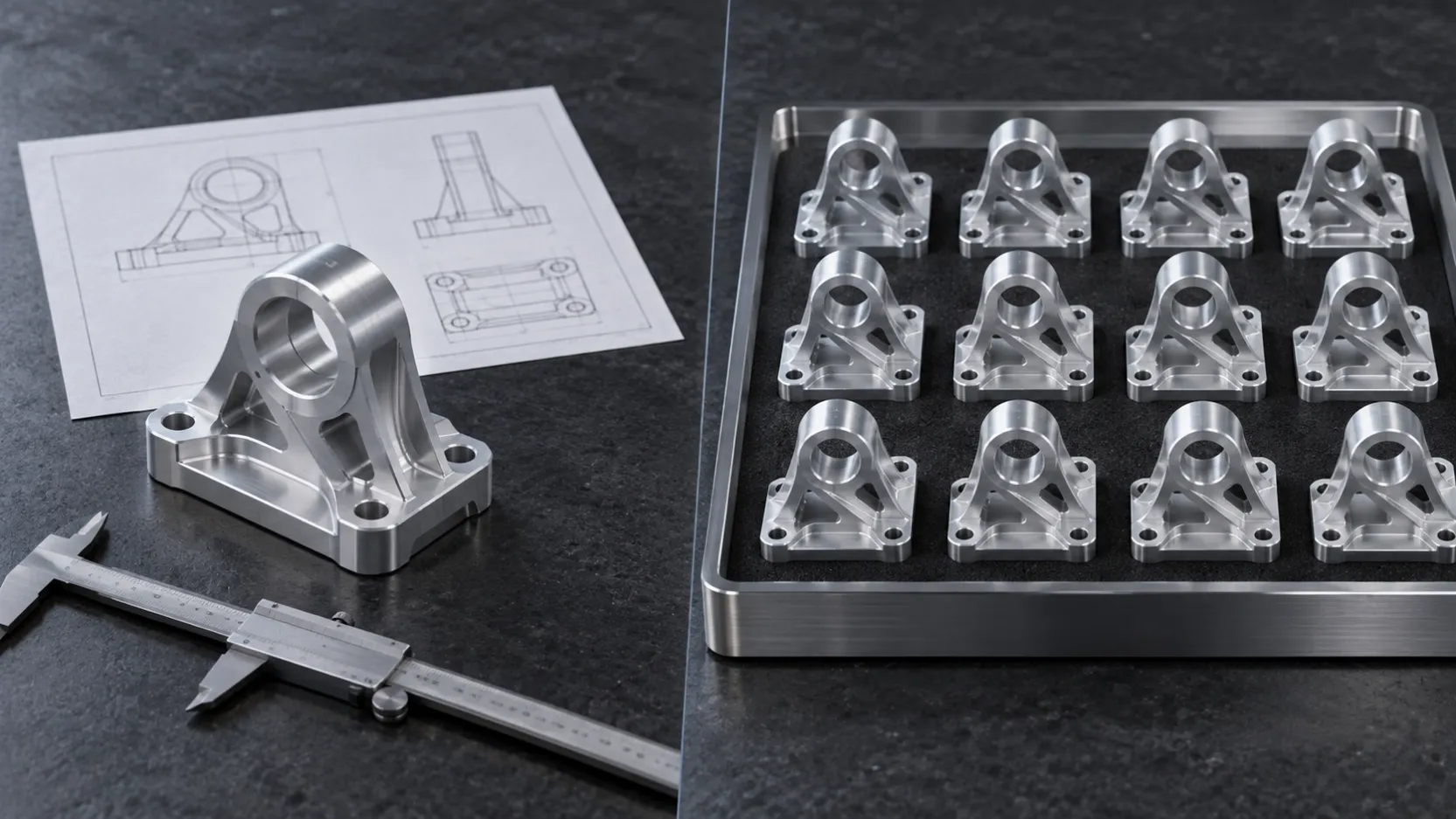
Choosing a five-axis machining supplier requires more than checking whether a factory owns a five-axis machine. The right partner must understand complex geometry, datum strategy, tool access, workholding, inspection, and the documentation required for your application.
This buyer’s guide explains what engineers and procurement teams should evaluate before sending a complex precision part to a five-axis machining supplier.
- Confirm That Five-Axis Machining Is Appropriate
Five-axis machining can position a cutting tool around multiple faces of a component in fewer setups. It is often considered for parts with compound angles, deep or angled features, complex surfaces, closely related datums, or features that are difficult to reach with conventional three-axis machining.
However, five-axis machining is not automatically the best or lowest-cost process. A capable supplier should review your drawing and CAD model, then explain whether simultaneous five-axis machining, indexed 3+2 machining, conventional milling, turning, or a combination of processes is appropriate.
Ask the supplier to explain why the proposed process suits your part rather than accepting a general claim that five-axis machining is more accurate.
- Send Complete RFQ Information
A reliable quotation depends on complete technical information. Send a revision-controlled 2D drawing together with a 3D CAD model whenever possible.
Your RFQ should identify:
- Material grade and condition
- Prototype and production quantities
- Critical dimensions and tolerances
- Datum references and geometric controls
- Surface-finish and coating requirements
- Inspection and documentation requirements
- Delivery location and requested schedule
- Any assembly, sealing, or functional features
Clearly identify which features are critical to performance. This helps the machining supplier plan tool access, setups, workholding, and inspection around the requirements that matter most.
- Evaluate Experience with Similar Geometry
Machine ownership does not prove process capability. Ask for relevant examples involving comparable materials, dimensions, feature relationships, and inspection requirements.
Useful questions include:
- How many setups are expected?
- Which features require five-axis access?
- How will the part be held without distortion?
- How will deep pockets, thin walls, or long-reach tools be managed?
- Which operations will be completed before surface treatment?
- What risks does the supplier see in the current design?
A professional supplier should be willing to discuss manufacturing risks and limitations before production starts.
- Review Workholding and Datum Strategy
Complex parts can lose accuracy when they are transferred between setups. One advantage of five-axis machining is the ability to reach several faces while maintaining a consistent relationship to the original workholding and datum strategy.
Ask how the proposed fixture locates the part and which datums will control critical features. For thin-wall or low-rigidity components, discuss clamping force, machining sequence, stress relief, and intermediate inspection.
The supplier should also explain how raw material variation and fixture access may affect the final result.
- Confirm Tolerance and Inspection Capability
Avoid selecting a supplier based only on a headline tolerance. Actual capability depends on part size, material, geometry, feature accessibility, temperature, setup, and inspection method.
For every critical requirement, confirm how it will be measured. Depending on the drawing, inspection may involve a coordinate measuring machine, height gauge, micrometer, bore gauge, thread gauge, surface-roughness instrument, optical equipment, or a dedicated fixture.
Before placing an order, agree on:
- First-article inspection requirements
- In-process inspection frequency
- Final inspection scope
- Sampling plan
- Measurement-report format
- Material certificates and traceability
- Calibration requirements
- Treatment or coating certificates
Inspection planning should be completed before production, not after a disagreement occurs.
- Check Material and Surface-Treatment Experience
Five-axis parts are produced from aluminum, stainless steel, alloy steel, titanium, copper alloys, engineering plastics, and many other materials. Each material can introduce different cutting, distortion, burr, heat, and surface-quality risks.
If a component requires anodizing, plating, passivation, heat treatment, or another finish, clarify whether drawing dimensions apply before or after treatment. Discuss masking, coating thickness, threaded features, mating surfaces, and post-treatment inspection.
Never accept an unapproved material or process substitution for a critical component.
- Compare Quotations on the Same Basis
The lowest unit price may exclude work that another quotation includes. Compare the same material, revision, quantity, machining scope, surface treatment, inspection, documentation, packaging, shipping terms, and delivery assumptions.
Check whether the quotation clearly states:
- Tooling or fixture charges
- Minimum order quantity
- Sample approval requirements
- Inspection-report costs
- Secondary-process costs
- Packaging and transport protection
- Lead-time starting point
- Payment and shipping terms
A transparent quotation makes supplier comparison easier and reduces unexpected charges later.
- Start with a Trial Order
For a new five-axis machining supplier, a prototype or small trial order provides stronger evidence than marketing claims.
Evaluate dimensional results, surface condition, deburring, packaging, delivery, technical communication, and the handling of any nonconformity. Test the parts in their intended assembly when possible.
Resolve issues before moving to repeat production, and confirm how approved drawings, programs, fixtures, inspection methods, and revision changes will be controlled.
Five-Axis Machining Supplier Checklist
Before approving a supplier, confirm:
- The current drawing and CAD revision were reviewed
- The proposed process is appropriate for the geometry
- Workholding and datum strategy are understood
- Critical tolerances have suitable inspection methods
- Material and surface-treatment requirements are clear
- Quality certifications and their scope were checked
- Quotation assumptions are transparent
- A trial order and approval plan are defined
- Change control and repeat-production requirements are agreed
Working with Zync Precision
Zync Precision manufactures custom CNC milled and turned components to customer drawings. We review part geometry, material, quantity, critical tolerances, surface finish, and inspection requirements before recommending a manufacturing approach.
For related capabilities, visit our Precision CNC Milling Services page:
https://www.zyncprecision.com/products/precision-cnc-milling-services
You can also compare milling and turning processes here:
https://www.zyncprecision.com/posts/cnc-milling-vs-cnc-turning
Request a Manufacturing Review
Send your 2D drawing, 3D CAD model, material, quantity, critical tolerances, surface-treatment requirements, inspection needs, and target delivery date to:
https://www.zyncprecision.com/contact
We will review your requirements and discuss a suitable manufacturing and quotation approach.