Custom CNC Parts
Custom Precision Metal Stamping Services
Custom metal stamping and forming services based on customer drawings. Send your material, quantity, geometry, finishing, and inspection requirements for review and quotation.
Zync Precision provides custom metal stamping and forming services for components manufactured to customer drawings.
We support project enquiries from prototypes and sample validation to repeat production. Each request is reviewed according to the drawing, material, quantity, part geometry, tooling requirements, finishing, inspection scope, and delivery expectations.
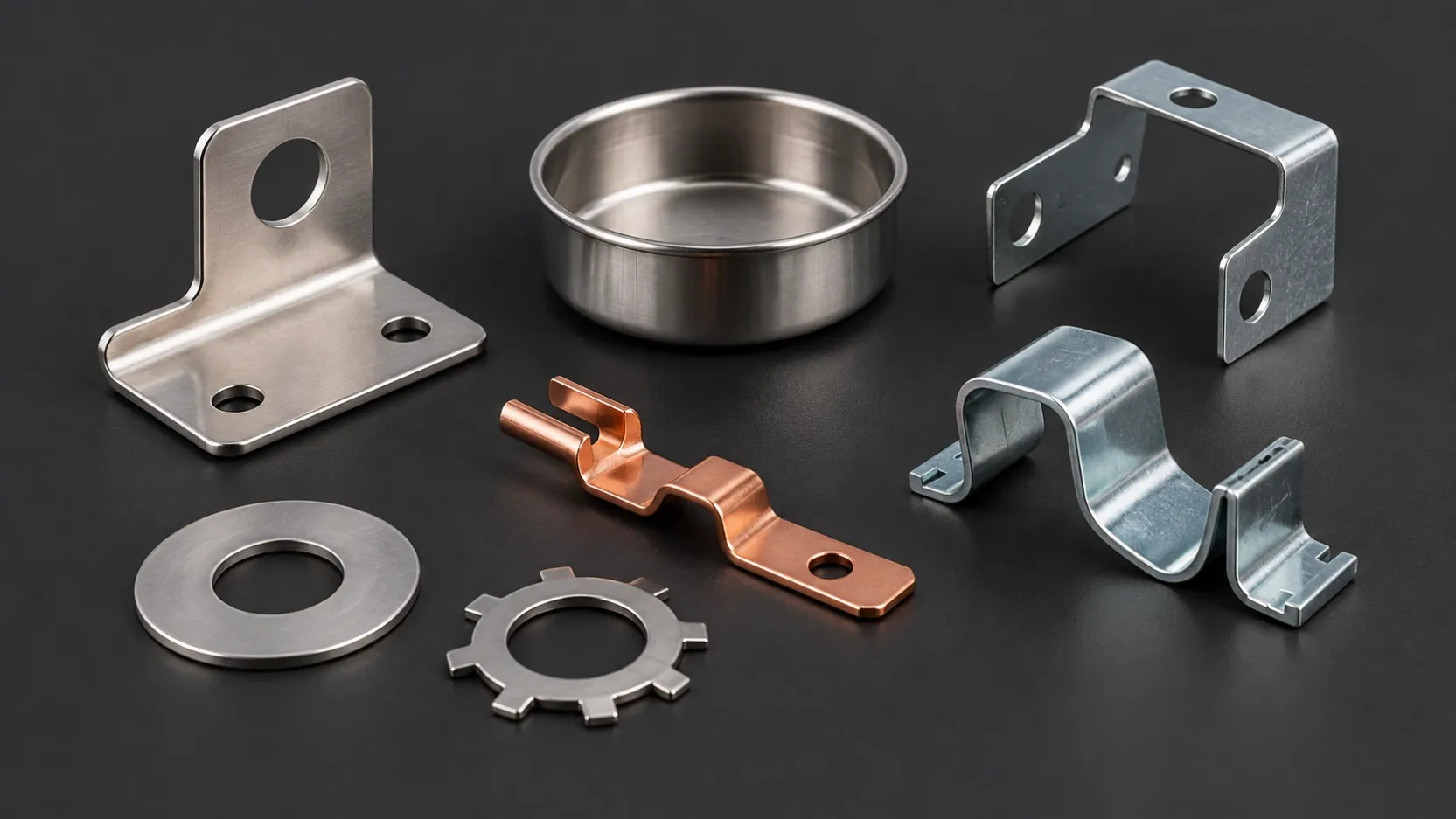
We do not sell the parts shown on this page as standard catalogue products. They are generic illustrations of possible stamped and formed geometries, not photographs of customer projects.
Custom Stamped Parts Made to Your Drawing
Metal stamping can be used to produce repeatable sheet-metal components with punched, blanked, bent, drawn, or formed features.
Drawing-based enquiries may include:
- Flat stamped washers, plates, and contacts.
- Brackets with punched holes and formed flanges.
- Clips, retainers, and spring-like formed components.
- Electrical contacts and conductive components.
- Shallow drawn cups and covers.
- Stamped parts requiring secondary bending or forming.
- Parts requiring deburring, surface treatment, or assembly.
- Other custom sheet-metal components produced to customer specifications.
The appropriate manufacturing route depends on the part geometry, material, thickness, required quantity, dimensional requirements, and tooling investment.
Send the current drawing and expected quantity so that the project can be reviewed before a manufacturing method is confirmed.
Stamping and Forming Operations
Depending on the drawing and production requirements, a project may involve operations such as:
- Blanking and punching.
- Hole and slot creation.
- Bending and flange forming.
- Shallow drawing and cup forming.
- Coining or local feature forming.
- Trimming and deburring.
- Secondary machining where required.
- Welding or sub-assembly where appropriate.
- Surface finishing and part identification.
Not every operation is suitable for every material or component. The proposed production sequence is confirmed after reviewing the complete drawing.
If your component requires progressive-die production, identify the expected annual quantity, material, strip requirements, and quality expectations in the enquiry. Tooling feasibility and production method must be evaluated for the specific project.
Materials for Review
Please state the exact material grade, thickness, and condition on the drawing.
Materials submitted for review may include:
- Stainless steel sheet.
- Carbon steel and mild steel.
- Aluminum sheet.
- Copper and brass alloys.
- Other specified sheet metals, subject to project review.
Material behaviour during forming varies by grade, hardness, temper, thickness, grain direction, and feature geometry. A general material description such as “stainless steel” may not provide enough information for a reliable quotation.
If the project requires material certificates, traceability, hardness verification, or a specific material standard, include that requirement when requesting a quote.
Material substitutions should not be made without customer approval.
Information Needed for Tooling Review
Tooling requirements can significantly affect price, lead time, and the most suitable production volume.
For an effective review, please provide:
- 2D drawing and 3D model, if available.
- Material grade and sheet thickness.
- Prototype and production quantities.
- Expected annual demand, if known.
- Critical dimensions and tolerances.
- Burr-direction or edge requirements.
- Surface-finish requirements.
- Cosmetic requirements for visible surfaces.
- Inspection and documentation requirements.
- Required delivery date and destination.
If existing tooling is involved, provide available tooling information, ownership details, maintenance history, and sample parts where appropriate.
Tooling cost, ownership, expected service requirements, and any replacement components should be clearly agreed before an order is placed.
Design Considerations for Stamped Components
A part that can be modelled in CAD is not automatically suitable for efficient stamping.
The manufacturing review may consider:
- Hole size and distance from edges.
- Distance between punched features.
- Bend radius and bend direction.
- Feature location near bends.
- Material thickness consistency.
- Draw depth and forming severity.
- Risk of distortion, cracking, or springback.
- Flatness and cosmetic-surface expectations.
- Burr location and acceptable edge condition.
- Accessibility for inspection and secondary operations.
If a requirement creates a foreseeable manufacturing risk, it should be discussed before tooling or production begins.
Any proposed change to the customer drawing remains subject to customer approval.
Tolerances Confirmed for the Specific Part
We do not apply one advertised tolerance to every stamped component.
Achievable tolerances depend on factors including:
- Material grade and thickness.
- Component size and geometry.
- Tooling design and condition.
- Number and sequence of forming operations.
- Location of features relative to bends.
- Springback and residual stress.
- Secondary processing.
- Measurement method and inspection condition.
- Required production quantity and process consistency.
Mark the dimensions that are critical to fit, function, or assembly. This helps distinguish functional requirements from general dimensions and supports a more useful manufacturing review.
Prototypes and Production Quantities
Prototype methods and production tooling may follow different routes.
For early validation, customers may need samples to check:
- Overall geometry.
- Assembly fit.
- Material selection.
- Bend direction.
- Hole and slot positions.
- Surface condition.
- Functional performance.
Prototype parts may not always be produced with the final mass-production tooling. If a different prototype process is proposed, the differences should be explained before the sample order is approved.
For repeat production, provide realistic order quantities and expected purchasing frequency. If demand is uncertain, request separate quotations for several quantity levels rather than presenting an uncertain forecast as a firm commitment.
Secondary Processing and Surface Finishing
A stamped component may require additional processing after forming.
Depending on the material and drawing, enquiries may include:
- Deburring and edge finishing.
- Cleaning and polishing.
- Plating.
- Powder coating.
- Anodizing for suitable aluminum components.
- Passivation for applicable stainless-steel components.
- Heat treatment, where specified.
- Welding or mechanical assembly.
- Laser marking or other part identification.
Clearly state whether dimensions and cosmetic requirements apply before or after finishing. Identify any surfaces that must remain untreated or protected.
The availability and suitability of each secondary process are confirmed during quotation.
Inspection and Quality Documentation
Inspection requirements should be defined before production rather than added after the quotation.
Depending on the project, customers may request:
- First-article inspection.
- Recorded results for selected critical dimensions.
- Material certificates.
- Surface-treatment documentation.
- Tooling or sample approval.
- Agreed sampling or full-inspection scope.
- Part and batch traceability.
- Packaging and labelling requirements.
Please identify which dimensions require recorded results. The proposed measurement method should be suitable for the feature, tolerance, and condition of the part.
Confidential Drawings and Tooling Information
We understand that custom components, drawings, tooling designs, and programme details may be confidential.
Customers do not need to disclose unrelated assembly information or end-customer names during an initial enquiry. However, enough technical information must be available to review manufacturability and prepare an accurate quotation.
If an NDA is required, contact us before sending sensitive files.
Permission to manufacture a component does not imply permission to publish the customer’s drawing, tooling, photographs, company name, or project details.
What to Send for a Metal Stamping Quote
Please include:
- Current 2D drawing and 3D model.
- Part number and drawing revision.
- Exact material grade and sheet thickness.
- Required order quantity.
- Expected repeat quantity, if known.
- Critical dimensions and tolerances.
- Burr and edge requirements.
- Surface treatment and cosmetic requirements.
- Inspection and documentation requirements.
- Packaging and identification requirements.
- Delivery destination and required date.
- Confidentiality requirements.
If any requirement is undecided, mark it as an open question rather than leaving it to assumption.
Frequently Asked Questions
Do you manufacture custom stamped parts from customer drawings?
Yes. This page is intended for drawing-based stamped and formed metal components rather than standard catalogue parts. Send the current drawing, material, thickness, and quantity for review.
Can you support prototypes before production tooling?
Prototype enquiries are welcome. The proposed sample method depends on the component and quantity. If the prototype process differs from the planned production method, that difference should be confirmed before approval.
Can you manufacture progressive-die stamped parts?
Projects requiring progressive-die production can be submitted for evaluation. Tooling suitability depends on geometry, material, thickness, tolerances, production volume, and expected programme life. Capability is confirmed after reviewing the project.
What materials can be stamped?
Stainless steel, carbon steel, aluminum, copper, brass, and other specified sheet metals may be submitted for review. The exact grade, thickness, and condition are required before suitability can be confirmed.
What quantity should I provide for quotation?
Provide the quantity required for the current order and any realistic repeat quantities. If the programme may grow, request separate quotations for several volume levels.
Can you provide finished and assembled parts?
Secondary finishing, welding, and assembly requirements can be included in the enquiry. The complete scope and available processes are confirmed during project review.
Who owns the stamping tooling?
Tooling ownership should be stated clearly in the quotation and purchase agreement. Confirm ownership, storage, maintenance, modification approval, and end-of-programme arrangements before placing the tooling order.
How much does a custom stamped part cost?
Pricing depends on material, thickness, geometry, quantity, tooling, secondary processing, inspection, and packaging. Send the drawing and production requirements so the complete scope can be evaluated.
Can you protect our drawings and project information?
If an NDA or controlled file-sharing arrangement is required, contact us before submitting confidential information. Customer drawings and project information should only be used for the agreed manufacturing review and production scope.
Request a Metal Stamping Quote
Send Zync Precision your drawing, material specification, sheet thickness, quantity, and delivery requirement.
Highlight the critical dimensions, formed features, cosmetic surfaces, and inspection requirements. If the production volume or tooling strategy is still undecided, identify those points in the enquiry.
For related manufacturing requirements, explore our Surface Treatment Solutions and Quality Control & Inspection.