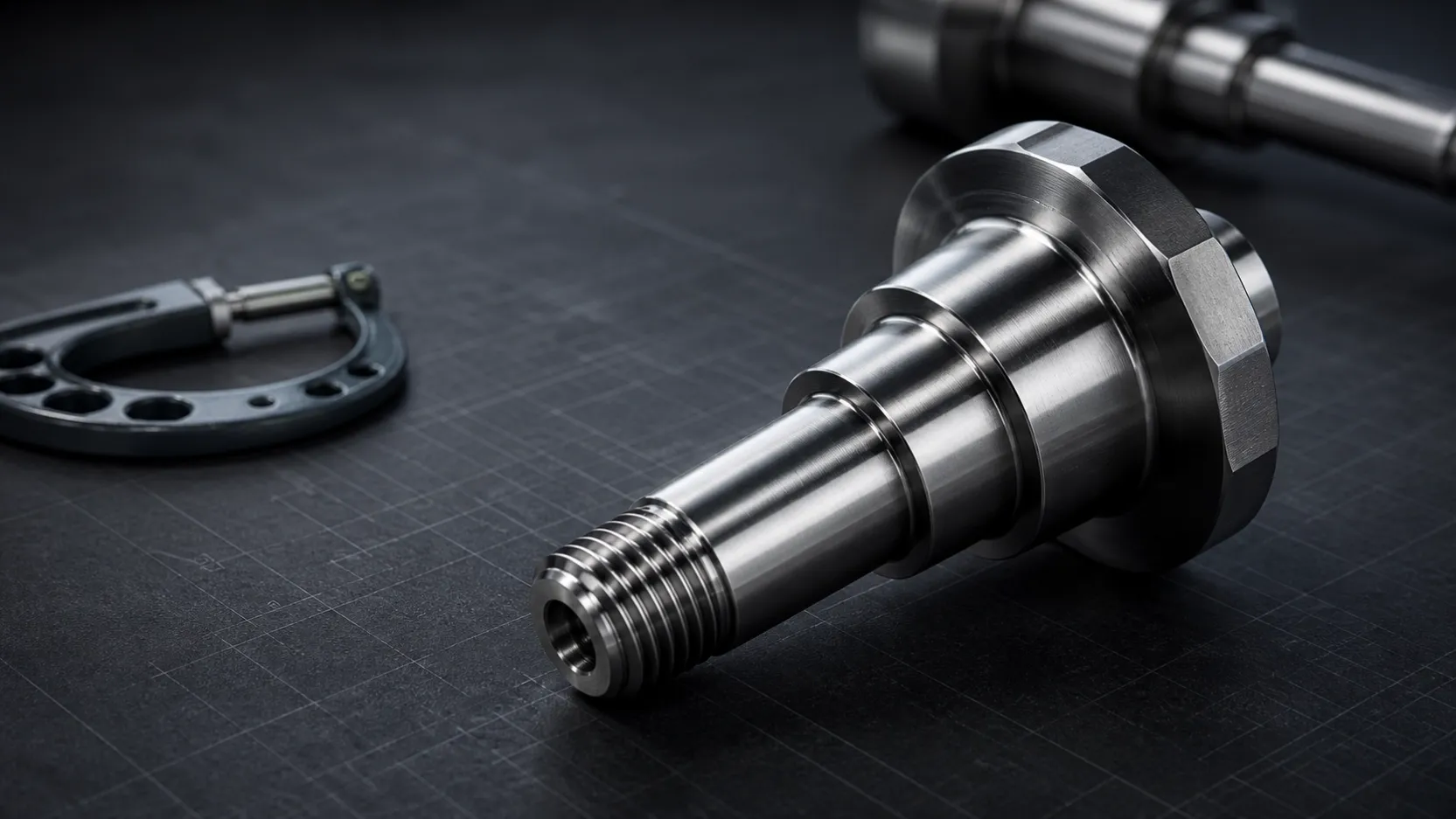
CNC Turning
Custom CNC Machined Steel Parts Manufacturer
Custom CNC machined steel parts in 1045, 4140, tool steel and other grades, with heat-treatment planning, hardness verification, dimensional inspection and material traceability.
A steel part can meet every drawing dimension and still fail early if the material grade, heat-treatment condition, hardness or grain flow is wrong. For purchasing and engineering teams, the real question is not only “Can this be machined?” but “Will it remain reliable after heat treatment, finishing and assembly?”
CUSTOM CNC MACHINED STEEL PARTS
Zync Precision manufactures non-standard steel components from customer drawings and STEP models, supporting prototypes, bridge production and repeat orders. We review material, machining condition, heat treatment, critical fits, surface finish and inspection requirements before production.
STEEL GRADES AND APPLICATIONS
AISI 1045 / C45
A practical medium-carbon steel for shafts, pins, sleeves, fixtures, rollers and general machinery components requiring higher strength than mild steel.
AISI 4140 / 42CrMo4
Commonly used for demanding shafts, gears, couplings, hydraulic components and load-bearing parts. Heat-treatment condition and hardness must be defined because they directly affect machinability and final performance.
Tool Steels
D2, H13 and other tool steels may be selected for wear resistance, dies, inserts, punches and high-load components. Machining allowance, heat-treatment sequence and post-treatment grinding should be planned together.
Low-Carbon and Other Alloy Steels
Grades such as 1018, 1020 and customer-specified alloy steels can be evaluated according to strength, weldability, coating and cost requirements. No material substitution is made without approval.
TYPICAL CNC MACHINED STEEL COMPONENTS
We support custom shafts, pins, sleeves, bushings, couplings, flanges, gears, blocks, brackets, valve parts, hydraulic parts, tooling components and machine elements for industrial equipment, automation, transportation and fluid-power systems.
HEAT TREATMENT CHANGES THE PART
Quenching, tempering, carburizing, nitriding and induction hardening can change dimensions, straightness and surface condition. Critical tolerances should be identified before quotation so machining stock, heat-treatment sequence and final grinding or finishing can be planned correctly.
When hardness is important, specify the required range, test method, test location and whether a hardness report is required. A hardness value without location or case-depth requirements may not protect the functional surface.
TOLERANCES, FITS AND DISTORTION CONTROL
Long shafts, thin walls, deep pockets and asymmetric parts may move as internal stress is released. We review geometry, datum strategy and process sequence to reduce distortion. Rough machining, stabilization, finish machining and grinding can be combined where the application requires tighter control.
For mating parts, specify the fit standard, functional clearance, mating component information and measurement condition. This is especially important for bearing seats, seal diameters, press fits and hydraulic interfaces.
SURFACE FINISH AND CORROSION PROTECTION
Steel components may require black oxide, zinc plating, nickel plating, phosphate coating, painting, PVD coating or another customer-approved finish. The drawing should identify masked areas, coating thickness, cosmetic zones and post-coating dimensional limits.
If corrosion resistance is critical, tell us the service environment, salt-spray requirement or storage expectation. The correct coating depends on use, not only appearance.
QUALITY CONTROL AND MATERIAL TRACEABILITY
Inspection is planned around features that affect assembly and service life. Depending on the project, documentation can include:
• Dimensional inspection reports
• First article inspection
• Material certificates and heat/lot traceability
• Hardness test reports
• Heat-treatment certificates
• Coating or plating certificates
• CMM inspection for critical geometry
State all documentation requirements in the RFQ. Adding certification after production can cause delays or require parts to be remade.
PROTOTYPE TO REPEAT PRODUCTION
A successful prototype must be translated into a controlled production process. Material source, revision, heat-treatment supplier, machining sequence, fixtures, tool life, inspection frequency and packaging must remain consistent. This helps manufacturing buyers reduce variation across repeat orders.
WHAT TO INCLUDE IN YOUR RFQ
• 2D PDF drawing and 3D STEP model
• Exact steel grade and delivery condition
• Prototype and production quantities
• Critical tolerances, fits and surface roughness
• Heat-treatment type, hardness and case depth
• Coating, masking and corrosion requirements
• Inspection reports and certification requirements
• Packaging and delivery schedule
REQUEST A STEEL CNC MACHINING QUOTE
Send your steel part drawing to Zync Precision. We will review material condition, machining risks, heat treatment, finish, inspection and production quantity, then provide practical DFM feedback and a quotation.