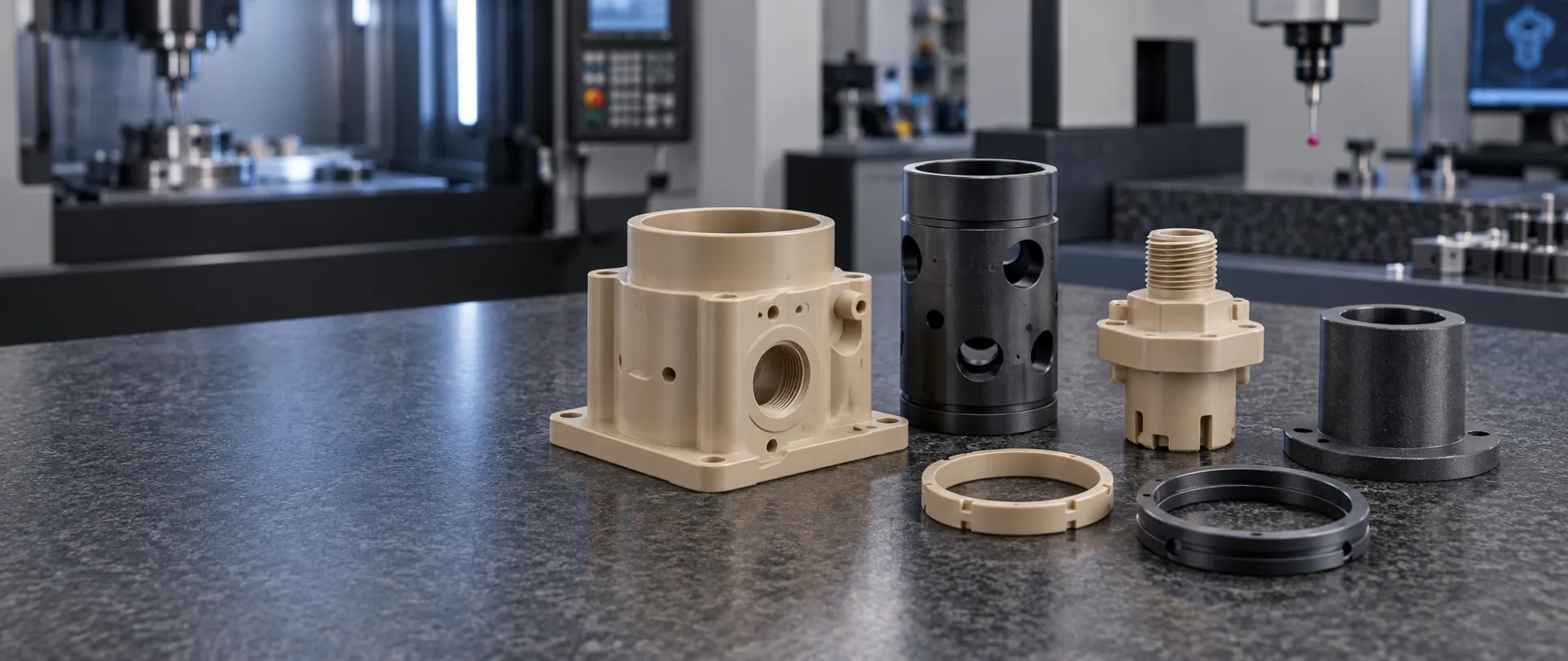
Custom CNC Machined PPS Parts Manufacturer
Custom CNC machined PPS parts for electrical, fluid-control, semiconductor and high-temperature equipment, with grade verification, distortion control, deburring, inspection and material traceability.
The PPS Part Survived Heat—But Failed at the Press Fit
A manufacturer may choose PPS because the component must handle temperature, chemicals, electrical insulation or dimensional stability. The first batch can still fail if the material grade, fiber orientation, machining stress, thin walls or assembly forces were not considered together. A bore may measure correctly before assembly and crack during an insert installation; a sealing face may move after asymmetric machining; a small burr may contaminate a fluid path.
Zync Precision manufactures custom CNC machined PPS parts from customer drawings, with RFQ review focused on the installed function, exact grade, deformation risk, burr control, inspection and traceability.
Specify the PPS Grade, Not Only the Material Family
Unfilled PPS, glass-filled PPS, carbon-filled grades, bearing grades and customer-approved compounds are not interchangeable. Reinforcement changes strength, thermal expansion, surface behavior, machinability and electrical performance. Include the full grade designation, manufacturer, color, filler percentage, compliance requirements and whether an equivalent is permitted.
If the design depends on UL rating, electrical properties, chemical compatibility or lot certification, state these requirements before quotation. Material certificates and traceability should be agreed rather than assumed.
Why Manufacturers Choose Machined PPS
- High-temperature electrical and sensor components
- Chemical-processing and fluid-control parts
- Semiconductor and automation equipment components
- Precision insulators, spacers and terminal supports
- Pump, valve and compressor components
- Prototypes and low-volume parts before molded tooling
CNC machining is particularly useful when geometry is still changing, tooling is not justified, or a manufacturer needs bridge production. Machined stock may behave differently from an injection-molded version, so validation goals should be defined when the prototype supports a future molding program.
Critical Machining and Assembly Risks
Brittle Features and Edge Chipping
Filled PPS can be stiff and relatively brittle at thin edges, small holes and sharp corners. Practical radii, supported workholding and controlled cutting reduce edge damage. Drawings should distinguish functional edge breaks from cosmetic requirements.
Movement After Material Removal
Deep pockets, thin walls and asymmetric geometry can move as material is removed. Roughing, stabilization and finishing strategy should follow the tolerance priorities. Flatness, parallelism and hole position must be reviewed in the released condition.
Press Fits, Inserts and Fastener Loads
A press fit that works in metal may create excessive hoop stress in PPS. Insert type, installation method, interference, boss wall thickness, screw torque and operating temperature should be reviewed together. Pull-out or torque requirements belong in the RFQ.
Burrs in Cross-Holes and Fluid Paths
Small feathered burrs at intersecting holes, threads and internal passages can affect sealing or contaminate an assembly. Identify critical passages and inaccessible intersections so the manufacturing and inspection plan addresses them.
Tolerances Should Follow Function
Applying a tight tolerance to every dimension raises cost without improving reliability. Mark the bores, sealing faces, datum relationships, hole positions and fits that control assembly. For high-temperature applications, clarify whether dimensions apply at room temperature or operating condition.
Inspection methods must suit the feature. Thin parts can deflect under contact, while filled materials may have textured surfaces that influence measurement. Agree critical characteristics, sample size and report format at quotation stage.
Surface, Cleanliness and Packaging Requirements
Sealing faces, electrical surfaces and sensitive equipment parts may require controlled handling, cleaning and packaging. State particle, oil, scratch, lint, bagging and labeling requirements. If the part will contact aggressive chemicals or high-purity media, provide the actual service conditions for review.
Prototype the Real Assembly
A useful prototype is tested with the intended inserts, fasteners, seals, mating components, temperature and chemicals. Measure critical dimensions before and after assembly or thermal exposure where relevant. This reveals whether a failure comes from geometry, material choice, installation force or service conditions.
What to Include in Your PPS Machining RFQ
- 3D CAD model and dimensioned 2D drawing with revision
- Exact PPS grade, filler and approved material supplier
- Prototype quantity, annual demand and target delivery
- Critical dimensions, fits and geometric tolerances
- Operating temperature, chemical exposure and electrical requirements
- Threads, inserts, press fits and assembly torque
- Critical internal passages and burr limits
- Inspection reports, material certificates and lot traceability
- Cleaning, packaging and labeling requirements
Request a PPS Manufacturability Review
Send your drawing package to Zync Precision for a practical review of PPS grade, geometry, deformation, fastening, deburring, inspection and traceability. The objective is a component that remains reliable after assembly and service—not simply one that measures correctly before installation.