
News & InsightsC-AngleCNC Machining Chamfering Custom PartsDeburringHuasheng Precision Machining
2026年3月23日
Why Engineers Love Chamfers: 5 Scenarios Where Adding a Chamfer is a Win-Win for CNC Machining
In the world of custom CNC machining, drawings often feature "sharp" 90-degree edges. As a professional manufacturer, we frequently suggest adding a chamfer (e.g., C0.2 or C0.5) where the design allow
In the world of custom CNC machining, drawings often feature "sharp" 90-degree edges. As a professional manufacturer, we frequently suggest adding a chamfer (e.g., C0.2 or C0.5) where the design allows.
Initially, some clients might ask: "Will this affect my assembly?" or "Why change the original design?"
At Huasheng, our senior engineers believe that a well-placed chamfer is more than just a "cut"—it’s a strategic optimization. Here are 5 scenarios where adding a chamfer does not affect use, and why customers are usually happy to approve the change.
1.The "Lead-in" for Seamless Assembly
• Scenario: When a pin needs to be pressed into a hole, or two parts need to be mated together.
• The Logic: A sharp 90-degree edge is prone to interference or "jamming" during assembly. A small lead-in chamfer (e.g., C0.5) acts as a guide, ensuring automatic centering and smooth insertion.
• Customer Feedback: Clients love this because it significantly reduces assembly time and labor costs on their end.
2.Safety First: Edge Breaking for Handling
• Scenario: External contours or edges that are frequently touched by human hands.
• The Logic: Machined edges are razor-sharp. "Breaking the edge" with a tiny chamfer (C0.1–C0.3) prevents cuts and injuries during handling.
• Customer Feedback: When we explain it’s for "Safety and Deburring," customers almost always agree immediately. It makes the final product feel more premium and professional.
3.The "Coating Protector": Superior Surface Finishing
• Scenario: Parts requiring anodizing, plating, or powder coating.
• The Logic: Sharp corners cause a "tip effect" during plating, leading to uneven coating thickness, chipping, or peeling at the edges. A micro-chamfer ensures the coating adheres uniformly across the entire surface.
• Customer Feedback: For high-end aesthetic parts, this is a must-have for long-term durability.
4.Extending Part Life: Reducing Stress Concentration
• Scenario: Structural components subject to high loads, vibration, or fatigue.
• The Logic: Sharp internal corners are "stress risers" where cracks often begin. A chamfer (or fillet) distributes the stress more evenly, significantly increasing the fatigue life of the component.
• Customer Feedback: For critical engineering projects, this technical insight proves the manufacturer’s expertise.
5.Cost Reduction: Automated vs. Manual Deburring
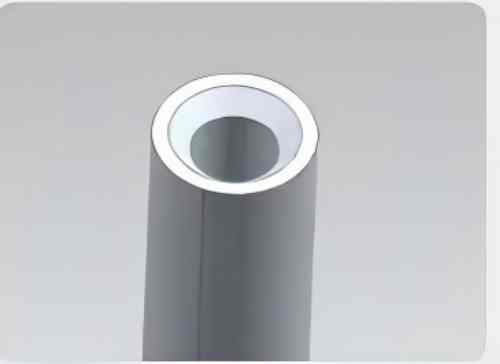
• Scenario: High-volume production runs (like our recent 500,000-piece Taper Cup project).
• The Logic: Manual deburring is expensive, slow, and inconsistent. By programming a C0.2 chamfer directly into the CNC cycle, we achieve "Machine-Finished" quality, which drastically lowers the unit price.
• Customer Feedback: When a client hears "Adding a chamfer reduces your cost," it becomes an easy "Yes."
The Huasheng Advantage
We don't just follow drawings; we optimize them. For projects like the Taper Cup, we work closely with clients to refine internal radii and edge chamfers. This ensures that even with a challenging material like C1100 Copper, we meet the strict Ra 0.8 surface finish and +/- 0.005mm tolerances.
Our Commitment:
- Technical Review: We provide professional feedback on every drawing.
- Cost Optimization: We suggest design tweaks that save you money without sacrificing quality.
- Rapid Response: 24-hour quoting and technical support.
Looking for a CNC partner who understands the "Art of the Chamfer"?
Contact Huasheng today for a professional technical review of your next project.