
News & InsightsC-AngleCNC Machining Chamfering Custom PartsHuasheng Precision Machining
2026年3月20日
The Art of the Edge: A Deep Dive into Chamfering in Custom CNC Machining
Learn why chamfering is key to CNC quality. This guide covers C-angles, R-angles, and how Huasheng ensures burr-free, high-precision edges for your custom parts.
Introduction: Details Define Quality
In the world of CNC non-standard custom machining, the excellence of a part is often found not in its primary dimensions, but in the treatment of its edges. Chamfering, the process of transitioning a sharp corner into a sloped or rounded edge, is far more than just a finishing touch. It is a critical step for safety, assembly, stress distribution, and aesthetics. At Huasheng, we believe that a perfect edge reflects a perfect process.
1.The Three Main Families of Chamfers: C, R, and Broken Edges
Depending on the application and design requirements, we typically categorize edge treatments into three types:
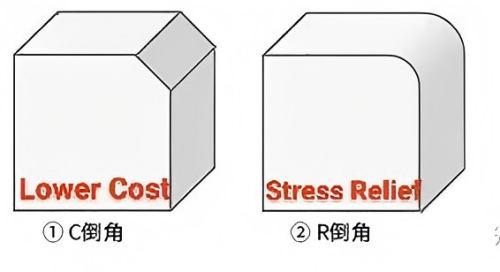
• C-Chamfer (Beveled Edge): The Industrial Standard
◦ Definition: Cutting a sharp 90-degree corner into a specific sloped surface (usually 45°).
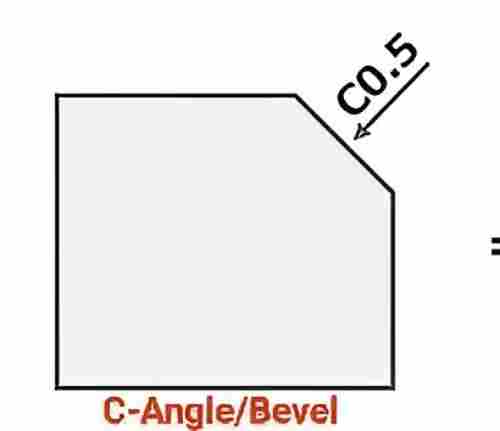
◦ Technical Note: A drawing callout like "C0.5" means a 0.5mm x 45° bevel.
◦ Primary Use: It acts as a "lead-in" for shafts and holes, making assembly significantly easier by guiding components into place.
• R-Chamfer (Fillet/Radius): Strength Meets Aesthetics
◦ Definition: Machining the edge into a smooth, rounded arc (Radius).
◦ Primary Use: Beyond its premium look and comfortable feel, an R-angle is vital for reducing stress concentration. In structural parts under high load, a radius prevents edge cracking and significantly extends the part's fatigue life.
• Line Chamfer (Broken Edge): The Invisible Quality Mark
◦ Definition: A tiny chamfer, usually less than C0.2mm, often used for deburring.
◦ Primary Use: The goal is to "break the sharp edge." While it may not be visible to the naked eye, it ensures the part is safe to handle. At Huasheng, we perform line chamfering on every part to ensure a "burr-free" guarantee.
2.Why is Chamfering Essential for Your Parts?
1.Enhanced Safety: It eliminates razor-sharp edges produced during machining, protecting logistics and assembly personnel from injury.
2.Optimized Assembly: Chamfers act as a "funnel," allowing for smooth, high-efficiency mechanical assembly even when there are slight alignment deviations.
3.Improved Coating Quality: For parts requiring plating or powder coating, chamfers prevent "edge buildup" or thinning, ensuring a uniform and durable surface finish.
4.Prevention of Deformation: Pre-treating edges prevents "mushrooming" or plastic deformation during forced assembly, which could otherwise lead to fitment failure.
3.Our Professional Approach: How We Machine the Perfect Chamfer
Following the highest industry standards, we implement a rigorous process for every edge:
• Multi-Stage Cutting: For large chamfers, we avoid "single-pass" cutting. We use a Roughing + Finishing strategy. We leave a 0.05mm allowance for the final pass to ensure a mirror-like finish without chatter marks.
• High-Precision Tool Compensation: Our CNC programmers strictly account for tool tip diameter (D) and cutting depth (Ad/Rd) to ensure the physical part matches your drawing's tolerances perfectly.
• Internal Edge Expertise: For tight internal cavities, we utilize specialized internal R-tools and deburring blades to solve the common industry pain point of "hidden burrs."
4.Pro-Tips for Designers (Cost & Efficiency)
To help you balance quality and cost in your custom projects, we suggest:
- Standardize to 45°: This allows us to use standard chamfering tools, which maximizes efficiency and minimizes your costs.
- Clear Annotations: Use notes like "Break all sharp edges C0.3" or "All edges must be burr-free" to reduce communication overhead.
- Consider Tool Access: When designing internal chamfers, ensure there is enough clearance for the tool to enter the cavity.
Conclusion
At Huasheng, every chamfer represents our respect for precision manufacturing. Whether you need a single prototype or high-volume production, we apply the same craftsmanship to every detail.
Have a project in mind? Contact our engineering team today for a professional DFM (Design for Manufacturing) evaluation and quote!
FAQ: CNC Machining Chamfers & Edges
Q1: Does adding chamfers significantly increase the machining cost?
A: Standard 45° C-chamfers usually have minimal impact on cost because we use standardized chamfering tools that work efficiently. However, complex R-chamfers (fillets) or internal chamfers in tight spaces may require 3D surfacing or specialized tools, which can increase machining time and cost slightly.
Q2: What is the "default" chamfer if no dimensions are specified on my drawing?
A: In the absence of specific instructions, our standard practice is to "break all sharp edges" (typically C0.1mm to C0.3mm). This ensures the part is safe to handle and burr-free without affecting the fit of the assembly.
Q3: How do I choose between a C-chamfer and an R-chamfer (Fillet)?
A: Choose a C-chamfer for ease of assembly (lead-ins) and lower cost. Choose an R-chamfer if the part requires high aesthetic appeal, needs to be comfortable for human touch, or if you need to reduce stress concentration to prevent the part from cracking under heavy loads.
Q4: Can you machine chamfers on internal holes or complex cavities?
A: Yes. We use specialized back-chamfering tools and tiny ball-end mills to handle internal features. However, the minimum hole size we can chamfer depends on the tool clearance. If your design has very small internal holes, please consult with https://api.whatsapp.com/send?phone=8617325948120for a DFM review.
Q5: Does the material (e.g., Stainless Steel vs. Aluminum) affect the quality of the chamfer?
A: Absolutely. Softer materials like Aluminum are prone to secondary burrs if the tool isn't sharp, while hard materials like Stainless Steel require slower speeds to prevent chatter marks. We adjust our spindle speeds and tool selection based on the material to ensure a smooth, mirror-like finish on every chamfer.