CNC Machining Guides
Robotics CNC Machining: A Buyer's Guide
A buyer's guide to CNC machined robotics and automation parts: materials, bearing fits, tolerances, surface finish, repeatability and supplier checklist.
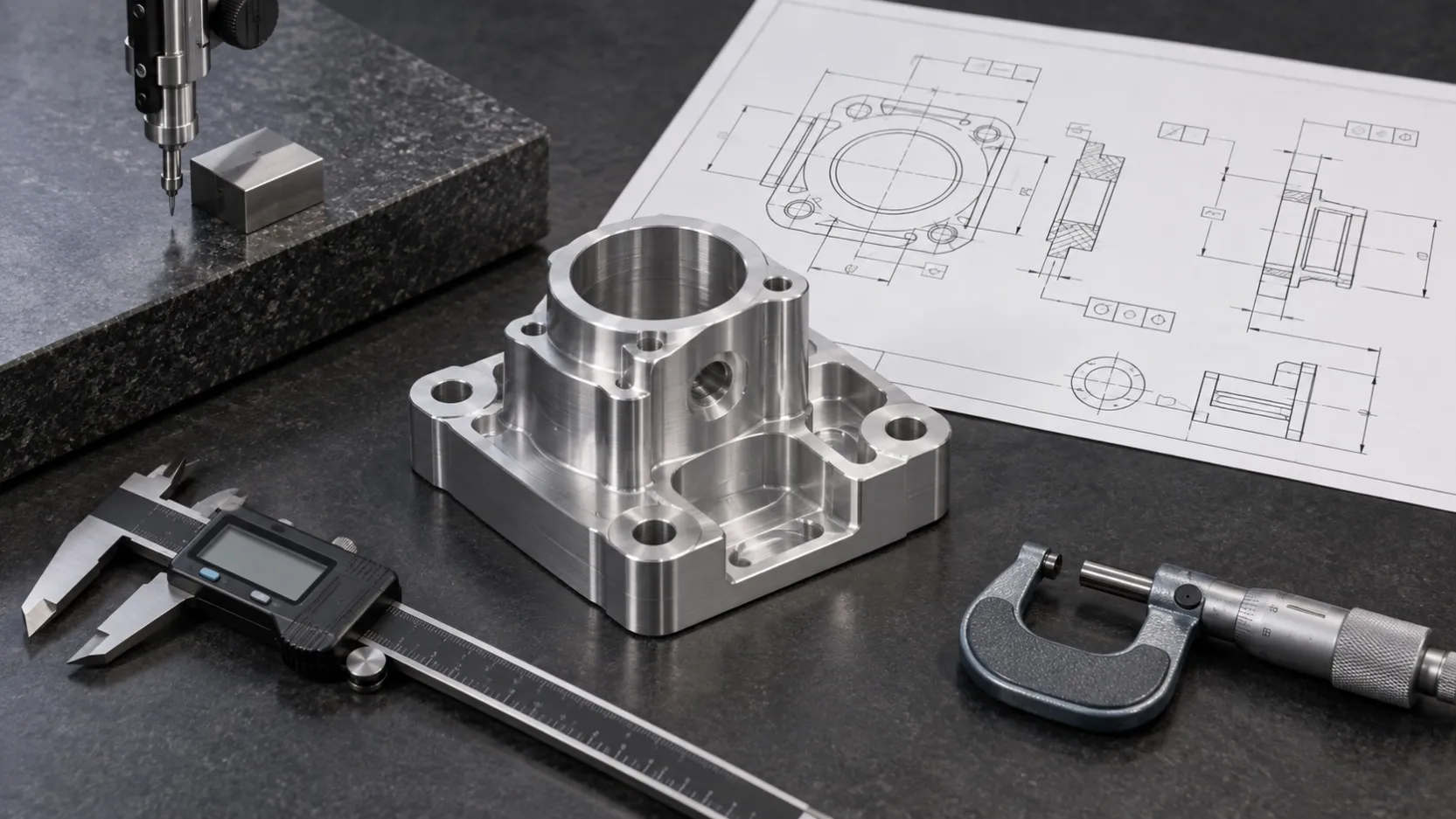
A joint housing can pass inspection, assemble smoothly on the bench, and still develop play after a few hundred thousand cycles. The dimensions were in tolerance. The problem was the bearing fit, the stiffness of the housing, and a surface finish that was never specified for the load path.
Robotics and automation parts are not just precision parts. They are parts that must remain precise after repeated motion, load, vibration, and temperature change. The machining, the material, the fit, and the inspection all affect whether the mechanism stays repeatable.
This guide is written for robotics engineers, automation integrators, and buyers who need custom machined components for robots, end effectors, grippers, linear modules, and production equipment. It covers the part types, materials, bearing fits, tolerances, surface finish, failure modes, and the questions to ask a supplier.
The Short Answer
Specify the function of the part, not just the drawing dimensions. For a joint housing, state the bearing fit, the stiffness requirement, and the load path. For a gripper jaw, state the wear surface and the grip interface. For a sensor mount, state the flatness and the mounting pattern. Use the right material and surface treatment, control the critical fits with a defined inspection method, and confirm that the supplier can repeat the process across batches.
What Robotics and Automation Parts Demand
A robot or automation system is a chain of motion. Every part in the chain affects the repeatability of the whole system.
Stiffness matters because deflection changes the position of the tool or the gripper. Weight matters because moving mass affects speed, acceleration, and motor sizing. Fatigue matters because the part may see millions of cycles. Wear matters because sliding and gripping surfaces change over time. Thermal stability matters because the mechanism may run in a changing environment. And precision matters because the fits determine the play, the alignment, and the life of the bearings.
A part that is dimensionally correct but not designed for the load path can still fail in service. The buyer should specify the function and the environment, not only the geometry.
Common Machined Parts and Their Critical Features
Robotics and automation use a wide range of machined components.
Joint housings and gearbox adapters carry the bearing and the motor, and they set the alignment of the joint. The critical features are the bearing bore, the mounting face, and the position of the mounting holes. End-effector plates and tool flanges mount the gripper or the tool and must be flat and stiff. Gripper jaws and fingers contact the workpiece and must resist wear. Sensor mounts and camera brackets must hold position without vibration. Linear module components, guide rail mounts, and belt tensioners must maintain alignment. Fixture plates, locating pins, and tooling components must be repeatable.
Each part has a different critical feature. A joint housing may be defined by the bearing bore and the mounting face. A gripper jaw may be defined by the grip surface and the wear resistance. A sensor mount may be defined by the flatness and the hole pattern. The drawing and the RFQ should reflect the function.
Materials for Robotics and Automation
The material choice is a balance of stiffness, weight, strength, machinability, wear, and cost.
Aluminum alloys are common for moving parts because they are light and easy to machine. 6061 is a general-purpose choice; 7075 offers higher strength. The temper matters. An anodized aluminum part can improve wear resistance and appearance, but the coating thickness and the masking should be specified.
Steel is used for high-strength parts, shafts, and wear surfaces. Stainless steel is used for corrosion resistance and cleanability. Titanium is used when the strength-to-weight ratio or corrosion resistance justifies the cost. Engineering plastics such as POM, PEEK, and polycarbonate are used for lightweight parts, insulators, and low-friction components.
The material should be selected for the function, not for the price alone. A heavier steel part may be cheaper per kilogram but increase the moving mass and the motor cost. A plastic part may be light but not stiff enough for the load. The total system cost matters.
Bearing Fits and Dowel Pins
The bearing fit is one of the most important features in a robot joint. It determines the play, the alignment, and the life of the bearing.
A bearing bore must control the diameter, the roundness, and the alignment. The tolerance depends on the bearing type, the load, the speed, and the assembly method. The bearing supplier's recommendation is a good starting point. A press fit that is too tight can damage the bearing; a fit that is too loose can create play. The housing material, the operating temperature, and the thermal expansion should be considered.
Dowel pins and locating features set the repeatability of the assembly. The hole position, the hole size, and the fit should be specified. A reamed hole with the correct interference can locate the part precisely; a clearance hole with a bolt can allow movement under load. The drawing should state the datum scheme and the position tolerance.
The inspection should match the fit. A CMM can check the bore diameter and the position, but the roundness and the cylindricity may need a dedicated measurement. For a critical bearing seat, the surface finish and the contact pattern may also matter.
Tolerances, GD&T and Inspection
Robotics parts often have tight tolerances on features that affect fit, alignment, and motion. The achievable tolerance depends on the geometry, the material, the setup, and the inspection method.
A general tolerance on the drawing is not enough for a critical fit. The drawing should identify the critical dimensions, the datum scheme, and the inspection method. For a bearing bore, the roundness and the cylindricity may matter as much as the diameter. For a mounting face, the flatness and the perpendicularity may matter more than the local thickness.
Thin walls and lightweight pockets can deflect during machining and inspection. The supplier should plan the fixturing and the finishing passes to control the deflection. If the part is flexible, the inspection condition should be defined.
Inspection should be planned with the part. A CMM can verify the critical dimensions and the datum scheme. Surface roughness should be measured with the specified cutoff and direction. For thin or flexible parts, the inspection condition should simulate the installed condition if the function depends on it.
Surface Finish and Wear
Surface finish affects friction, wear, sealing, and appearance.
For sliding surfaces, the finish should match the lubrication and the mating material. A surface that is too rough can wear the mating part; a surface that is too smooth can lose lubrication. For gripping surfaces, a controlled texture can improve the grip. For sealing surfaces, the finish and the flatness should be specified together.
Anodizing is common for aluminum parts. Type II anodizing improves corrosion resistance and appearance; hardcoat anodizing improves wear resistance. The coating thickness affects the dimension, so the tolerance and the masking should account for it.
PVD coatings can reduce friction and wear on steel and other materials. The coating is thin, but it can affect the surface finish and the dimension. The coating specification and the masked surfaces should be on the drawing.
Design Rules That Reduce Cost and Risk
Good design makes machining easier and the mechanism more reliable.
Use ribs and pockets to reduce weight without sacrificing stiffness. A uniform wall thickness and generous radii reduce stress and machining difficulty. Avoid sharp internal corners that require small tools and slow cutting.
Design the bearing fits and the dowel pin holes with the assembly in mind. A fit that is too tight can damage the bearing; a fit that is too loose can create play. The tolerance should be based on the bearing supplier's recommendation and the operating temperature.
Consider the assembly sequence. A part that is easy to machine may be difficult to assemble. A part that is easy to assemble may require a tolerance that is expensive to machine. The design should balance both.
Specify the surface treatment and the masking. A hardcoat anodized part with masked bearing bores is different from a part that is anodized all over. The difference affects the fit, the cost, and the lead time.
Common Failure Modes and Prevention
Most field failures in machined robotics parts come from a small number of causes.
Play develops when the bearing fit is too loose or the housing loses stiffness. Fretting occurs at dowel pins and bolted joints when the joint moves under vibration. Fatigue cracks start at sharp corners or abrupt section changes. Gripper jaws wear when the surface treatment is not matched to the workpiece. Corrosion appears when the material or the coating is wrong for the environment. Thermal growth changes the fit when the operating temperature is different from the assembly temperature.
Each failure mode has a design and inspection response. The bearing fit needs a defined tolerance and a roundness check. The dowel joint needs the right interference and surface finish. The fatigue detail needs a radius and a stress review. The gripper jaw needs a wear surface. The corrosion risk needs the right alloy and coating. The thermal fit needs the operating temperature in the tolerance stack-up.
The supplier should ask about the application and the environment. The buyer should share the failure history if there is one. The best quote is not the one with the lowest price; it is the one that addresses the failure modes that matter.
Repeatability and Production Consistency
A prototype that works is not enough. The production parts must work the same way, batch after batch.
The supplier should control the process, the fixtures, the tooling, and the inspection. The first article inspection establishes the baseline. The production inspection confirms that the process has not drifted. If the part is critical, the supplier should have a plan for sampling, traceability, and change control.
Ask how the supplier will maintain the critical fits over time. Ask what happens if a tool wears, a machine changes, or a subcontractor changes. A good supplier will have a documented process and a notification plan.
Supplier Checklist for Robotics Parts
Ask these questions before placing the order.
Can you hold the bearing fit and the dowel-pin position with the specified inspection method? How do you control roundness, cylindricity, and flatness on the critical features? What material and surface treatment do you recommend for the load and the environment? How do you control deflection on thin walls and pockets? What is your first article and production inspection plan? How do you control surface treatment and masking? What is your change control process? Can you support a prototype and a production ramp? What documentation can you provide? Have you made a similar part before?
The answers should be specific. A supplier that says yes to everything without evidence is not a robotics supplier.
What to Put in the RFQ
State the function of the part and the critical features. Identify the bearing fits, the dowel pin holes, the mounting faces, and the wear surfaces. State the load, the motion, the environment, and the expected life if they affect the design.
State the material, the temper, and the surface treatment. State the tolerance and the inspection method for the critical features. State the quantity, the delivery destination, and the documentation requirement.
If the part is part of an assembly, provide the mating parts or the assembly drawing. If the fit is critical, ask the supplier to review the tolerance stack-up. If the part will be anodized or coated, state the masking and the dimensional impact.
FAQ
What aluminum alloy is best for robot parts?
6061 is a good general-purpose choice; 7075 offers higher strength. The right alloy depends on the load, the stiffness, the weight, and the machining. The temper and the surface treatment also matter.
How do I specify a bearing fit?
Use the bearing supplier's recommendation for the housing and the shaft, and state the tolerance, the roundness, and the inspection method. Consider the operating temperature and the assembly method. Do not rely on a general tolerance for a critical bearing fit.
Should robot parts be anodized?
Anodizing improves corrosion resistance and wear resistance, and it can improve appearance. It also adds thickness and may require masking. Specify the type, the thickness, the color, and the masked surfaces.
How do I control repeatability in production?
Use a controlled process, defined fixtures, a first article inspection, and a production inspection plan. Control the critical features, the material, the surface treatment, and the change process. Ask the supplier for the records.
Can you machine prototypes and production parts?
Yes. Zync Precision machines prototypes and low-volume production parts from customer drawings and CAD files, with material traceability, dimensional inspection, and production support.
Choosing a Robotics Machining Supplier
A robotics supplier should understand the function, not just the drawing. The supplier should be able to discuss the fits, the stiffness, the weight, the surface treatment, and the inspection in specific terms.
Zync Precision is an ISO 9001 and IATF 16949 certified manufacturer of custom CNC machined parts for medical, aerospace, consumer electronics, and automotive applications. We machine aluminum, steel, stainless, titanium, and engineering plastics for automation and motion-control components, with material traceability, dimensional inspection, and production support. Our engineering team reviews drawings, materials, tolerances, surface finishes, and delivery requirements, and responds to quote requests within 24 hours. If you are sourcing robotics or automation components, send your drawing, material, critical fits, surface treatment, quantity, and destination.
Request a CNC machining quote and let us review your robotics project.