CNC Machining Guides
How to Read a CNC Machining Quote Line by Line
Three quotes for the same part can differ by 2-3x. Learn how to read a CNC machining quote line by line, spot missing scope, and compare total cost—not unit price.
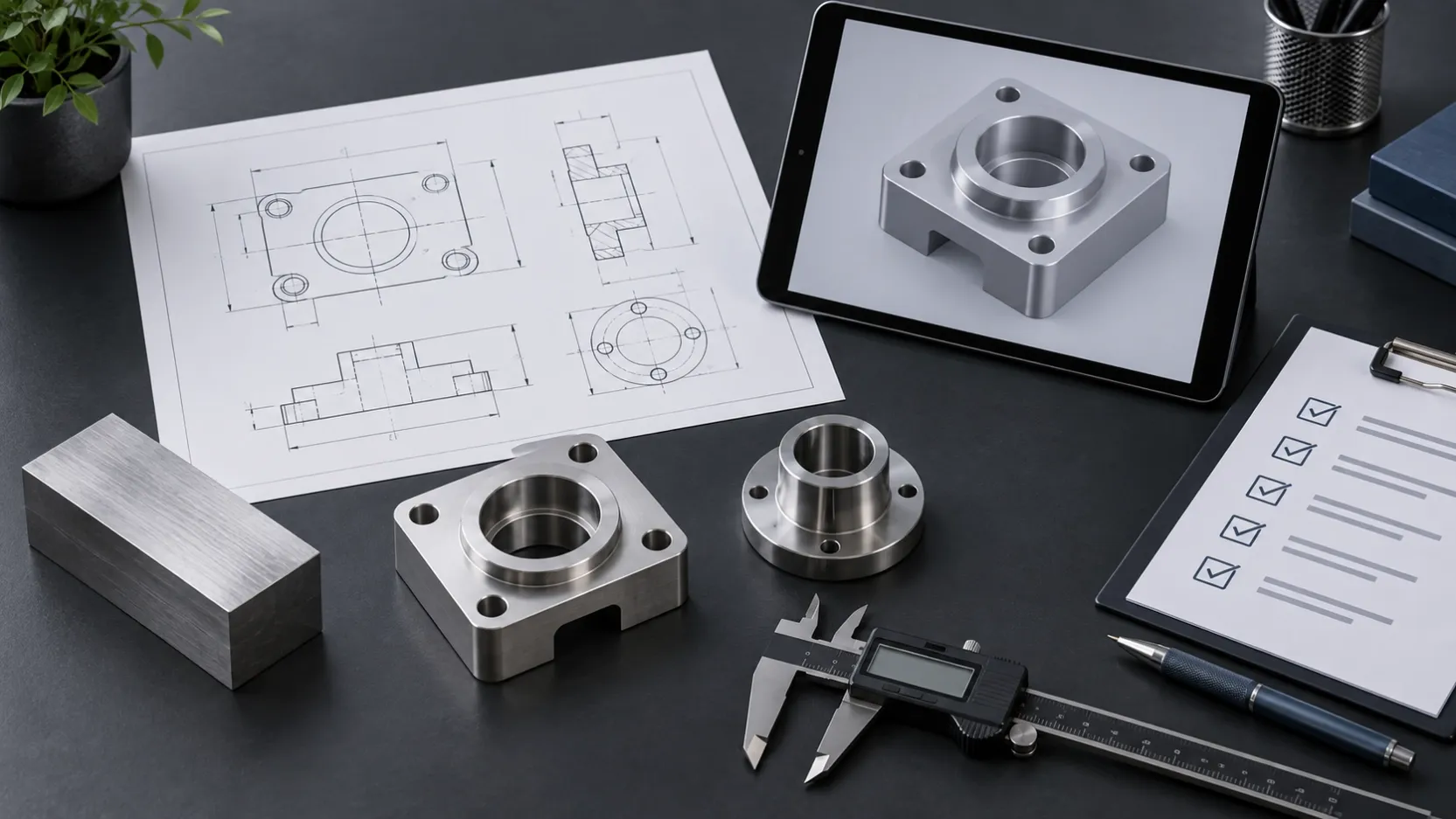
You send the same drawing to three suppliers. One quote comes back noticeably lower than the others. It is tempting to take it. Before you do, read the lines.
A low quote is not always a cheap part. It may exclude the material certificate, assume a general tolerance, leave out the surface finish, or quote a lead time that depends on a machine that is already fully booked. The difference is often not the machining rate. It is the scope.
This guide is written for buyers who need to compare CNC machining quotes without a machining background. It explains what each line of a quote means, which lines most often hide cost, how to normalize quotes to the same scope, and what to ask before you place the order.
The Short Answer
Do not compare the bottom line until you have compared the scope. Check the material grade and certificate, the tolerance and inspection method, the surface finish and special processes, the packaging and freight, the lead time basis, the payment terms, and the exclusions. A quote is only comparable when both suppliers are quoting the same part, the same material, the same quality requirement, and the same delivery.
Why the Same Part Gets Different Quotes
Two suppliers can quote the same drawing and arrive at very different numbers without either one being dishonest. They may be making different assumptions.
One supplier may assume a general tolerance; another may quote the tightest tolerance on the drawing. One may include the material certificate; another may treat it as an extra. One may include inspection; another may inspect only the first article. One may quote a standard lead time; another may quote an expedited date with overtime. One may include packaging and delivery; another may quote ex works.
The quote is a proposal, not a measurement. The buyer's job is to make the proposals comparable.
The Anatomy of a CNC Machining Quote
A well-written quote has several lines or sections. The exact format varies, but the content should be clear.
Material
The quote should state the material grade, the condition, and the specification. "Aluminum" is not enough. "6061-T6" is better. "6061-T6, ASTM B209" is better still. For stainless steel, the grade and condition matter. For titanium, the grade and the interstitial limits matter. For plastics, the grade and the color matter.
If the material line is vague, ask for the exact grade and specification. A material substitution can change the strength, the corrosion resistance, the machinability, and the price.
Material certificate
The material certificate, or mill certificate, confirms the grade, the heat lot, and the specification. Some buyers require it; some do not. If the quote does not mention it, ask whether it is included.
For regulated industries, the certificate is part of the deliverable, not an optional extra. The quote should state what documentation is included.
Setup and programming
Setup and programming are one-time costs for the order. They cover the CAM programming, the fixture design, the tool setup, and the first-article checks. For a simple part, the setup may be small. For a complex part with tight tolerances or multiple operations, it can be significant.
A quote that omits setup may be spreading it across the unit price. Ask how the setup is charged and whether it is a one-time cost or a per-batch cost.
Machining time
The machining time is the estimated cycle time multiplied by the machine rate. It depends on the material, the geometry, the tolerance, the surface finish, and the number of setups.
A low machining time can be a sign of an optimistic estimate or a different process. Ask what cycle time and machine the quote assumes. If the part has a tight tolerance or a fine finish, the cycle time should reflect it.
Tooling and fixtures
Tooling and fixtures may be included, charged separately, or amortized into the unit price. Custom fixturing is common for parts with difficult geometry or tight tolerances. Ask whether the fixture is included and who owns it.
If the fixture is a one-time cost, it may be reusable for repeat orders. Clarify that in the quote.
Inspection
Inspection can range from a visual check to a full first article inspection and CMM report. The quote should state what is included. "Inspection included" is not enough; ask what is inspected and how.
For critical features, the inspection method should match the tolerance. A caliper is not the same as a CMM. The quote should reflect the inspection plan, not just the machining.
Surface finish and special processes
Surface finish, anodizing, passivation, plating, coating, heat treatment, and other special processes may be included or quoted separately. The quote should state the specification and the supplier.
If the finish is a special process, ask whether the subcontractor is approved and how the result is verified. A low quote that excludes the finish is not a complete quote.
Packaging and freight
Packaging and freight are often overlooked in the comparison. A quote that includes export packaging and delivery may be higher than a quote that is ex works. The buyer should compare the total landed cost, not the unit price at the supplier's dock.
Ask what packaging is included, whether it meets the destination requirements, and who arranges the freight.
Lead time
The lead time should state the basis: from purchase order, from drawing approval, from material arrival, or from first article approval. A quote that says "two weeks" without a basis is not a commitment.
Ask what the lead time includes and what could change it. Material availability, special processes, and inspection can extend the schedule.
Payment terms and validity
Payment terms affect cash flow and risk. The quote should state the deposit, the balance, and the payment method. The validity period matters for material prices and capacity.
Ask whether the price is valid for the stated quantity and date, and what happens if the quantity changes.
Exclusions and assumptions
A good quote states what is not included. Common exclusions include material certificates, special processes, inspection reports, packaging, freight, duties, and expedite fees. The exclusions are where the apparent low price often comes from.
Read the exclusions before you compare the bottom line.
The Five Lines That Most Often Hide Cost
Most quote surprises come from the same five areas.
The material line may use a generic grade or a substitute. The tolerance line may assume a general tolerance while the drawing calls for a tighter one. The finish line may exclude the anodizing or the passivation. The inspection line may include only a visual check. The packaging and freight line may be excluded.
If a quote is significantly lower than the others, check these five lines first. The difference is usually in the scope, not in the machining rate.
How to Normalize Quotes
To compare quotes fairly, build a simple comparison sheet. Use the same rows for every supplier.
List the material grade and certificate, the tolerance and inspection method, the surface finish and special processes, the packaging and freight, the lead time basis, the payment terms, and the exclusions. For each supplier, write what is included, what is excluded, and what is assumed.
Then compare the total landed cost, not the unit price. Add the setup, the tooling, the inspection, the finish, the packaging, and the freight. If the quote is for a different quantity, normalize the unit price to the same quantity.
Finally, compare the risk. A supplier with a complete scope and a realistic lead time may be the better choice even if the unit price is higher. A supplier with a low price and an incomplete scope may cost more after the missing items are added.
Red Flags in a CNC Quote
Some warning signs are worth a follow-up question.
The quote does not state the material grade or the certificate. The tolerance is described as "standard" without a value. The surface finish is not specified. Inspection is not mentioned. The lead time has no basis. The quote does not state the quantity, the revision, or the drawing number. The payment terms are unclear. The price is valid for an unspecified period. The exclusions are vague.
None of these is automatically a reason to reject a supplier. They are reasons to ask a question before you compare the price.
Questions to Ask Before You Sign
Ask these questions before you place the order.
What material grade and condition are you quoting? Is the material certificate included? What tolerance and inspection method are included? Is the surface finish included, and what specification? Are special processes included, and who performs them? What packaging and freight are included? What is the lead time basis? What are the payment terms? What is excluded? What happens if the quantity changes?
The answers will tell you more about the supplier than the unit price.
A Simple Quote Review Process
First, read the scope, not the price. Highlight the material, tolerance, finish, inspection, packaging, and lead time on each quote.
Second, normalize the quotes to the same scope. Add the missing items or ask the supplier to re-quote with them included.
Third, compare the total landed cost and the risk. Choose the supplier that gives you the most complete and reliable answer, not the lowest number on the first page.
A quote review takes an extra hour. A wrong supplier decision can cost weeks.
FAQ
Why is one CNC quote so much lower than the others?
The difference is usually in the scope: a generic material, a general tolerance, an excluded finish, a limited inspection, or a lead time that depends on assumptions. Ask what is included before you compare.
Should I always choose the lowest quote?
No. The lowest quote may be the lowest scope. Compare the total landed cost, the lead time, the inspection, and the risk. The best supplier is the one that gives you a complete and reliable answer.
What should a CNC quote include?
A complete quote should include the material grade and certificate, the setup and machining, the tooling and fixtures, the inspection, the surface finish and special processes, the packaging and freight, the lead time basis, the payment terms, and the exclusions.
How do I compare quotes for different quantities?
Normalize the unit price to the same quantity and include the one-time costs, such as setup and tooling. Ask each supplier to quote the same quantity and the same scope.
Can I ask a supplier to re-quote?
Yes. A good supplier will welcome a clearer RFQ. If a quote is missing a line, ask for a revised quote with the missing item included. That is better than discovering the gap after the order.
Get a Quote You Can Actually Compare
A quote should be clear enough to compare, not just low enough to notice. Zync Precision is an ISO 9001-certified manufacturer of custom CNC machined parts for medical, aerospace, consumer electronics, and automotive applications. Our engineering team reviews drawings, materials, tolerances, surface finishes, inspection requirements, and delivery, and responds to quote requests within 24 hours. If you want a quote with the scope spelled out, send your drawing, material, quantity, tolerance, finish, inspection requirement, and destination.
Request a CNC machining quote and let us review your project.