Sep 18, 2026CNC Machining Guides
How to Choose the Right Material for CNC Machined Parts
Compare aluminum, stainless steel, carbon and alloy steel, brass, copper, and engineering plastics when selecting materials for custom CNC machined parts.
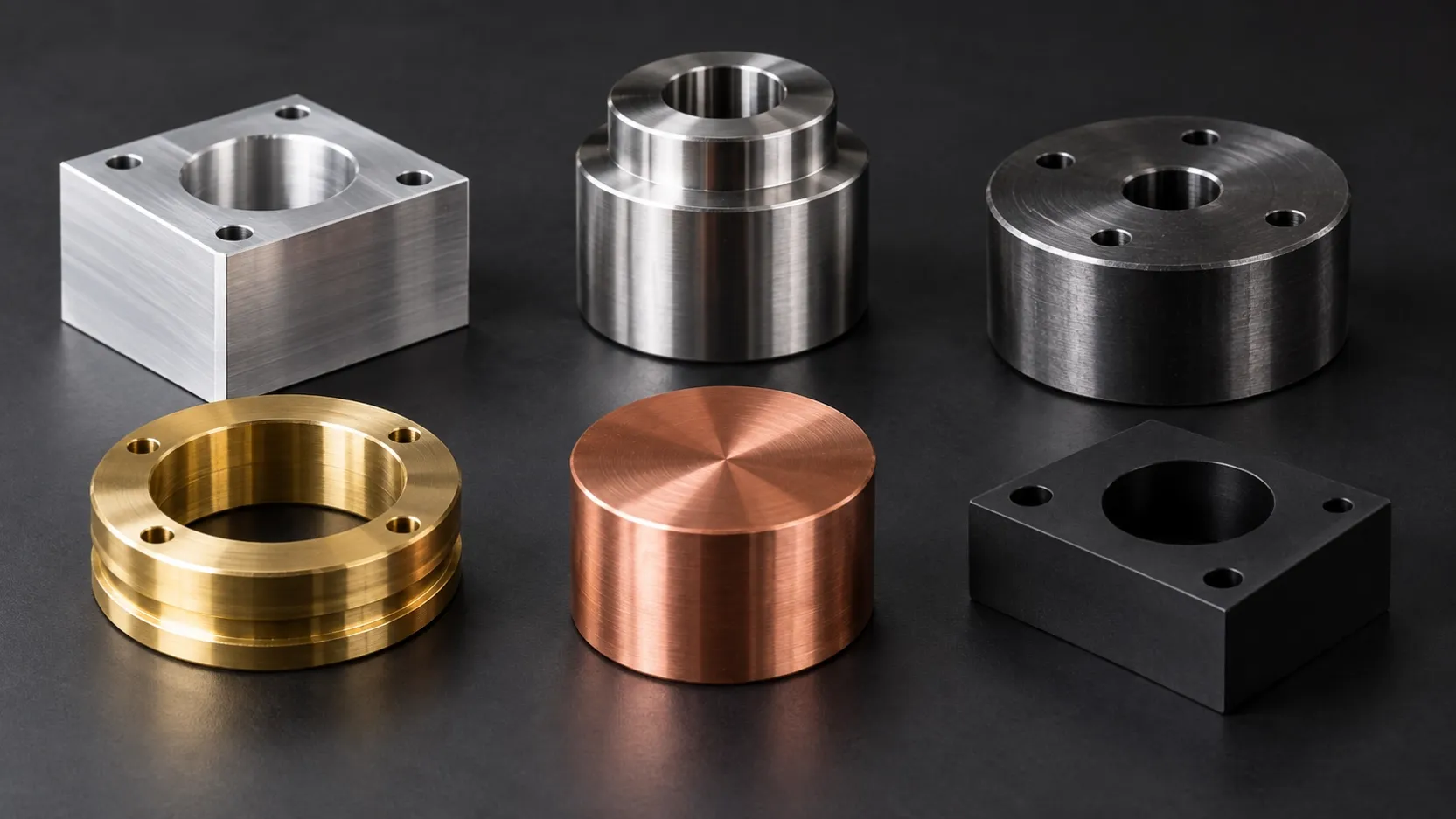
Material selection affects the performance, machinability, dimensional stability, surface finish, lead time, and cost of a custom CNC machined part.
There is no single best material for every project. The correct choice depends on the component’s function, mechanical loads, operating environment, weight target, corrosion exposure, temperature, electrical requirements, finishing, quantity, and budget.
This guide compares commonly considered material groups and explains what information to provide when requesting a CNC machining quotation.
Start with the Part’s Functional Requirements
Before selecting a grade, define what the part must do.
Consider:
- Mechanical load
- Required strength and stiffness
- Impact or fatigue exposure
- Wear and friction
- Operating temperature
- Corrosion exposure
- Weight limitation
- Electrical or thermal conductivity
- Magnetic requirements
- Dimensional stability
- Cosmetic appearance
- Regulatory or material-documentation requirements
A familiar material is not always the most appropriate choice. Select the material based on the complete operating conditions rather than appearance or unit price alone.
Aluminum Alloys
Aluminum alloys are frequently considered for machined components that require relatively low weight, corrosion resistance, and good machinability.
Common applications may include:
- Housings
- Brackets
- Fixtures
- Electronic enclosures
- Covers and plates
- Structural components
- Prototype parts
Potential advantages include:
- Lower density than steel
- Good machinability for many grades
- Useful thermal conductivity
- Natural corrosion resistance
- Compatibility with several surface treatments
- Suitability for complex milled geometry
Important considerations include:
- Strength varies significantly by alloy and temper
- Thin walls may distort during machining
- Cosmetic surfaces require clear acceptance criteria
- Anodizing may affect dimensions and appearance
- Threads may need special consideration in repeated assembly
Specify the complete alloy and temper rather than writing only “aluminum.”
Stainless Steel
Stainless steels are often selected for corrosion resistance, durability, appearance, and service in demanding environments.
Typical applications may include:
- Shafts and pins
- Bushings and sleeves
- Fluid-handling parts
- Food or process equipment components
- Medical or laboratory equipment components
- Outdoor or corrosive-environment parts
Potential advantages include:
- Corrosion resistance
- Good strength for many grades
- Durable finished appearance
- Availability in several families and conditions
- Suitability for precision turned and milled parts
Important considerations include:
- Different grades have different corrosion and mechanical properties
- Some grades are more difficult to machine
- Heat generation and work hardening may affect processing
- Surface-finish requirements should be defined clearly
- Passivation or other post-processing may be required
- Magnetic behavior varies by grade and condition
Do not treat all stainless steels as interchangeable. State the required grade, condition, and certification.
Carbon and Alloy Steels
Carbon and alloy steels are commonly considered when strength, stiffness, wear performance, or heat-treatment capability is important.
Possible applications include:
- Shafts
- Gears and transmission components
- Machine components
- Pins and fastener-related parts
- Wear components
- Structural parts
- High-load fixtures
Potential advantages include:
- Broad range of mechanical properties
- Good stiffness
- Heat-treatment options
- Availability in many forms and grades
- Suitability for parts exposed to load or wear
Important considerations include:
- Unprotected steel may corrode
- Heat treatment may cause dimensional change
- Hardness affects machinability
- Grinding or finishing operations may be required after heat treatment
- Coating or plating allowances may affect dimensions
- Material condition must be defined before quotation
If heat treatment is required, specify the target condition or hardness and identify which dimensions must be controlled afterward.
Brass
Brass is often considered for parts that require machinability, corrosion resistance, electrical properties, or a distinctive appearance.
Common applications may include:
- Fittings
- Electrical components
- Bushings
- Valve-related parts
- Instrument components
- Decorative or visible parts
Potential advantages include:
- Good machinability for suitable grades
- Useful corrosion resistance in many environments
- Electrical and thermal conductivity
- Low-friction behavior in some applications
- Attractive natural appearance
Important considerations include:
- Properties vary by alloy
- Not every brass grade is suitable for every environment
- Appearance may change over time
- Lead-content or regulatory requirements may apply
- Strength may be lower than selected steels
- Material certification may be important
State the exact brass alloy and any compliance requirements rather than choosing by color alone.
Copper and Copper Alloys
Copper is selected mainly for its electrical and thermal conductivity. Copper alloys may provide different combinations of strength, wear resistance, corrosion behavior, and machinability.
Possible applications include:
- Electrical contacts
- Conductive components
- Heat-transfer parts
- Busbar-related components
- Electrodes
- Specialized bushings
Potential advantages include:
- High electrical conductivity
- High thermal conductivity
- Useful corrosion behavior
- Availability in several alloy families
Important considerations include:
- Pure copper can be challenging to machine cleanly
- Material can mark or deform during handling
- Surface condition may be important
- Conductivity requirements should be specified
- Plating may be required
- Different copper alloys are not interchangeable
If electrical performance is critical, include the required material standard and conductivity-related requirements.
Engineering Plastics
Engineering plastics may be suitable when low weight, electrical insulation, chemical resistance, low friction, or non-metallic construction is needed.
Possible applications include:
- Insulators
- Guides
- Spacers
- Wear pads
- Bushings
- Equipment components
- Prototype parts
Potential advantages include:
- Low density
- Electrical insulation
- Corrosion resistance
- Low-friction options
- Wide range of chemical and temperature properties
- No metal-related rust
Important considerations include:
- Plastics can expand with temperature
- Moisture absorption may affect dimensions
- Some materials can creep under continuous load
- Thin sections may distort
- Workholding must avoid deformation
- Surface finish differs from machined metal
- Material grade and supplied condition matter
Do not specify only “plastic.” Identify the exact polymer grade and any temperature, wear, food-contact, flame, or chemical-resistance requirements.
Compare Strength and Stiffness Separately
Strength and stiffness are not the same property.
Strength relates to the material’s resistance to yielding or failure. Stiffness relates to how much it deflects under load.
A material can have adequate strength but still allow excessive deflection. This is especially important for:
- Long shafts
- Thin plates
- Cantilevered features
- Lightweight brackets
- Precision alignment components
- Thin-walled housings
Evaluate the complete geometry and loading condition rather than selecting a material from strength data alone.
Consider Weight and Component Size
Material density affects the weight of the final part.
Lower-density materials may be useful for moving assemblies, transportation equipment, handheld devices, or weight-sensitive structures. However, changing from steel to aluminum may require geometry changes to maintain stiffness, wear resistance, or thread performance.
A material substitution should be reviewed as a design change, not only as a purchasing decision.
Consider Corrosion and the Operating Environment
Define the environment in which the component will operate.
Important questions include:
- Indoor or outdoor use?
- Exposure to water, humidity, salt, chemicals, or cleaning agents?
- Contact with food or process fluids?
- High or low temperature?
- Contact with dissimilar metals?
- Is coating maintenance acceptable?
- Is cosmetic discoloration acceptable?
Corrosion performance depends on the exact alloy, surface condition, environment, and contact with other materials.
Do not rely on a general statement such as “corrosion resistant” without defining the service environment.
Consider Heat Treatment
Some steels and other alloys may be heat treated to change hardness or mechanical performance.
When heat treatment is required, provide:
- Material grade
- Required heat-treatment process
- Target hardness or condition
- Case-depth requirement where applicable
- Areas that must remain untreated
- Dimensions controlled after treatment
- Distortion limitations
- Required certification
Machining may be divided into operations before and after heat treatment. This can affect cost and lead time.
Consider Surface Finishing
Material selection and surface finishing should be evaluated together.
Possible finishing requirements include:
- Anodizing
- Plating
- Passivation
- Coating
- Polishing
- Blackening
- Heat treatment
- Deburring
- Controlled as-machined finish
Ask whether the selected material is compatible with the required finish.
Define:
- Functional and cosmetic surfaces
- Color or appearance requirement
- Coating thickness where relevant
- Masked areas
- Thread protection
- Dimensions controlled before or after finishing
Consider Machinability and Part Geometry
Material machinability affects cutting tools, machining time, heat, chip control, surface finish, burr formation, and dimensional stability.
The same material may behave differently depending on the geometry.
Features that require additional review include:
- Deep pockets
- Thin walls
- Small internal radii
- Deep holes
- Long slender shafts
- Fine threads
- Narrow slots
- Interrupted cuts
- Tight tolerances
- Large amounts of material removal
Send both the material specification and complete part geometry for manufacturing review.
Material Cost Is Only One Part of Total Cost
A lower-cost raw material does not always produce the lowest-cost finished component.
Total cost may include:
- Raw material
- Material availability
- Machining time
- Tool wear
- Number of setups
- Heat treatment
- Surface finishing
- Inspection
- Scrap risk
- Packaging
- Documentation
A more machinable material may reduce processing time. A corrosion-resistant material may reduce the need for coating. A stronger material may allow different geometry.
Compare the complete manufacturing route rather than only the price per kilogram.
When Material Substitution Is Acceptable
If alternative materials may be considered, state this in the RFQ.
Before approving a substitute, compare:
- Mechanical properties
- Stiffness
- Hardness
- Corrosion resistance
- Temperature capability
- Electrical or thermal behavior
- Weight
- Machinability
- Finishing compatibility
- Certification
- Regulatory requirements
The customer or responsible design authority should approve any material change before production.
What to Include in a Material Specification
Provide the following information where applicable:
- Material family
- Exact alloy or grade
- Standard
- Temper or condition
- Required hardness
- Heat treatment
- Material certification
- Regulatory requirements
- Approved alternatives
- Surface finishing
- Final inspection condition
Make sure the 2D drawing, 3D model, purchase information, and RFQ use consistent material descriptions.
Material Selection Checklist
Before requesting a CNC machining quotation, confirm:
- What load will the part experience?
- How stiff must it be?
- What is the operating temperature?
- Will it face corrosion, chemicals, or moisture?
- Is weight important?
- Does it require electrical or thermal conductivity?
- Is wear resistance required?
- What tolerances are critical?
- Is heat treatment required?
- What surface finish is needed?
- Is material certification required?
- Are substitutions permitted?
- What quantity is required?
These answers help establish a more accurate manufacturing review.
Request a Material and Manufacturing Review
Zync Precision reviews custom CNC machined parts according to customer drawings, material specifications, quantities, tolerances, finishing, inspection, and delivery requirements.
Send the current 2D drawing and 3D model together with the proposed material and application requirements. If the material has not been finalized, identify the required performance and any permitted alternatives.