CNC Machining Guides
Hot-Dip Galvanizing: Threads, Welds and Rework
A real fabrication case study: the drawing passed, but hot-dip galvanizing blocked the threads and the weld failed the real use case. What buyers should specify before the first cut.
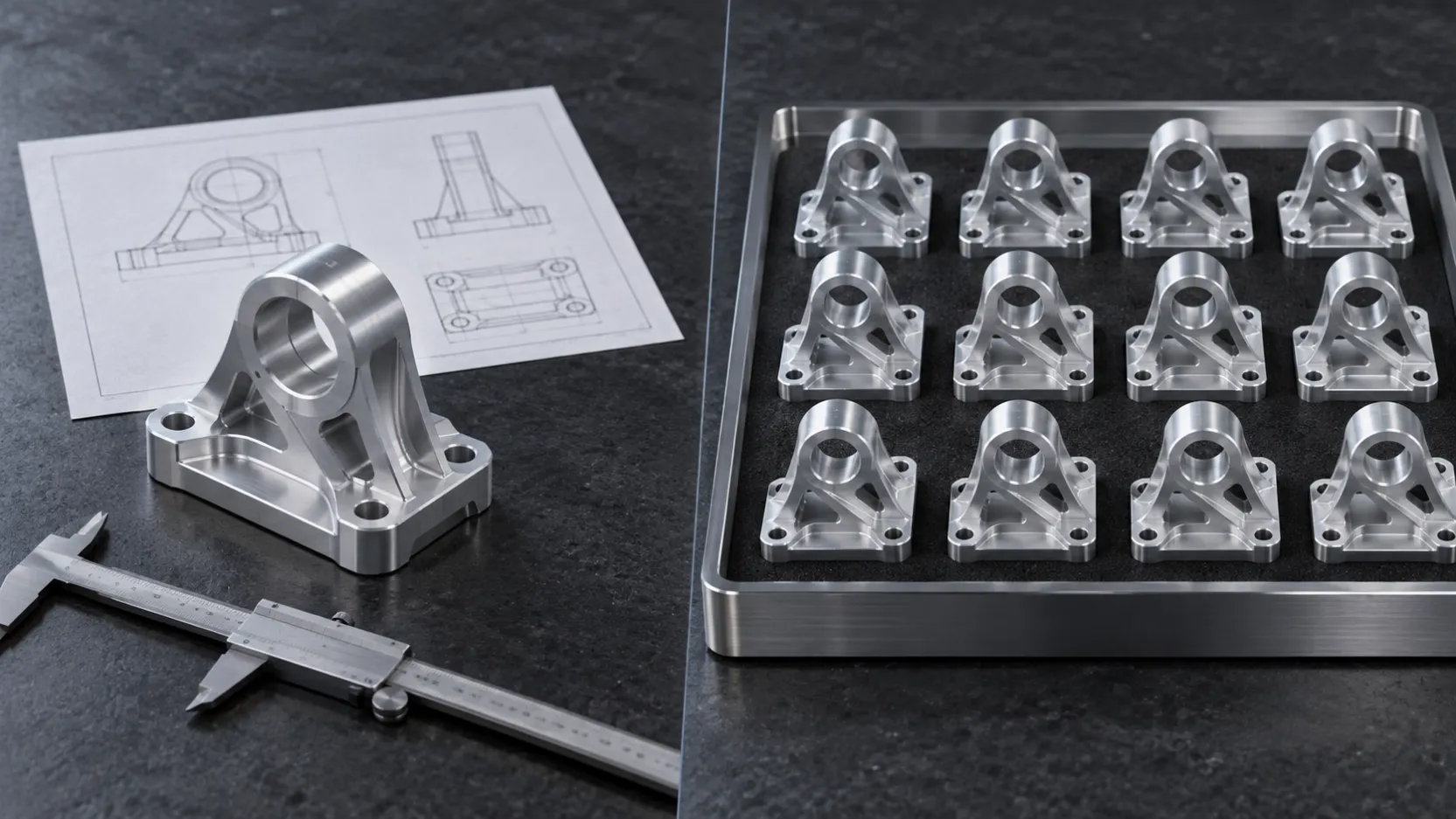
A bent and welded steel assembly arrived at the customer's inspection with the right dimensions. The threads did not pass the go/no-go gauge. After the threads were cleaned and the parts were shipped again, the customer found that the weld strength did not meet the real use case. The joint needed a full weld, not the weld that was on the drawing.
The final batch has now been made and sent to the customer for inspection. The lessons are already clear. Most of the cost and delay came from three requirements that were not in the drawing: thread protection during hot-dip galvanizing, the weld type, and the sequence between welding and coating.
This case study is written for buyers and engineers who source bent, welded, and galvanized steel assemblies. It explains what happened, why the rework was difficult, and what to specify before the first cut so the same problem does not happen again.
The Short Answer
A drawing can define the geometry and still miss the process requirements that decide whether the part works. For a hot-dip galvanized weldment, specify the thread protection, the weld type and penetration, the coating standard, the inspection method, and the sequence: weld first, inspect the weld, then galvanize. If the weld is reworked after galvanizing, the coating is damaged, and a cold zinc repair is not the same as hot-dip galvanizing.
The Project
The part was a bent and welded steel assembly with threaded holes. The customer sent a drawing and, later, a physical sample. The sample revealed details that the drawing did not show clearly: the threads had to remain functional after coating, and the weld had to carry the load of the assembled joint.
The first batch was machined and formed to the drawing, welded, and hot-dip galvanized. The dimensions were correct. The threads were the first problem. The molten zinc had entered the threaded holes and left a coating that prevented the go/no-go gauge from passing. The residue was cleaned, the threads were reworked, and the parts were shipped.
The customer then found the second problem. The weld strength was not sufficient for the application. The joint needed a full weld, not a partial weld. Full welding was technically possible, but the parts had already been galvanized. Reworking the weld meant grinding off the coating and the affected surface, re-welding, and restoring the corrosion protection. The repair was no longer equivalent to the original hot-dip coating.
The final batch was made with the weld corrected and the coating sequence adjusted. It has been shipped for customer inspection.
What the Drawing Missed
The drawing defined the shape, the dimensions, and the material. It did not define three process requirements clearly enough.
First, it did not say how the threads should be protected during hot-dip galvanizing. The threads were specified, but the coating process was not specified at the thread level. The result was a thread that was dimensionally correct before coating and not functional after coating.
Second, it did not define the weld type and the weld extent. A weld symbol can be interpreted in more than one way if the drawing does not state whether the weld is intermittent, continuous, full penetration, or a specific size. The customer's use case required a full weld. The drawing did not make that requirement explicit enough for the first batch.
Third, it did not define the sequence between welding and coating. The parts were galvanized before the weld requirement was fully validated. Once the coating was applied, any weld rework would damage the coating. The sequence was the root of the rework trap.
Problem One: Threads After Hot-Dip Galvanizing
Hot-dip galvanizing immerses the part in molten zinc. The zinc coats the outside and the inside of the part, including holes and threads. The coating is durable and long-lasting, but it changes the dimensions. A thread that is correct before galvanizing may not accept the mating fastener after galvanizing.
There are several ways to handle threads. The threads can be plugged or masked before galvanizing. The threads can be tapped or chased after galvanizing. The thread can be designed with an allowance for the coating. The chosen method should be stated on the drawing and agreed with the galvanizer.
In this project, the thread protection was not specified. The zinc entered the threads, and the go/no-go gauge did not pass. The residue was cleaned and the threads were reworked, but this was a correction, not a controlled process. A better plan would have been to plug or mask the threads, or to specify a post-galvanizing re-tap and a gauge check.
Problem Two: Weld Strength and the Real Use Case
The weld looked acceptable. The customer's use case told a different story. The joint needed a full weld to carry the load, and the first batch did not have the full weld that the application required.
A weld symbol on a drawing is a contract. If the symbol is ambiguous, the supplier may produce a weld that meets the symbol but not the function. The buyer should state the weld type, the size, the length, the penetration, and the inspection method. If the joint is critical, the drawing should show the weld map and the acceptance criteria.
The sample helped, but it arrived after the first batch. A physical sample can reveal the weld type, the thread condition, and the coating coverage in a way that a drawing may not. The sample should be reviewed before the first cut, not after the first shipment.
The Rework Trap: Welding After Galvanizing
Welding after hot-dip galvanizing is difficult for a simple reason: the zinc coating must be removed from the weld area before welding. Grinding removes the coating and some of the base material. Welding over zinc can cause porosity and fumes. After welding, the area must be cleaned and re-coated.
The re-coating is the hard part. Hot-dip galvanizing the whole part again may distort the part, block the threads again, and add lead time. A local repair with a cold zinc coating is faster, but it is not the same as a hot-dip coating. The cold zinc repair may have a different thickness, adhesion, and service life. It is a compromise, not an equivalent.
In this project, the full-weld rework meant grinding the coating, re-welding, and repairing the corrosion protection. The final batch used a cold zinc repair because a second hot-dip cycle carried a high risk of blocking the threads again. The decision was practical, but it highlighted why the sequence matters. The weld should be completed and inspected before the coating is applied.
The Better Sequence
For a welded, galvanized assembly, the sequence should be planned before the first cut.
Start with a drawing review that covers the weld type, the thread protection, the coating standard, and the inspection method. If a sample is available, review it before the first batch. Identify the critical threads and the critical welds. Decide how the threads will be protected during galvanizing: plugging, masking, post-galvanizing re-tapping, or a thread allowance. Decide how the weld will be inspected: visual, dimensional, or another method. Weld first, inspect the weld, then galvanize. After galvanizing, check the threads with the specified gauge and check the coating thickness and coverage.
If a weld rework is required after galvanizing, treat it as a deviation, not a normal step. Define the repair procedure, the coating repair method, and the acceptance criteria. Record the deviation and the customer approval.
What to Put in the Drawing and RFQ
State the weld type and the weld extent. Use a weld symbol and a note that describes the full weld, the size, the length, and the penetration. If the joint is critical, include a weld map and the inspection method.
State the thread requirement after coating. Identify the threads that must remain functional, the gauge, and the protection method. State whether the threads will be plugged, masked, or re-tapped after galvanizing.
State the coating standard and the coating thickness. State whether hot-dip galvanizing is required, and whether a cold zinc repair is acceptable for touch-up. State the surfaces that must be free of coating, such as threads, machined faces, and electrical contact areas.
State the sequence. The supplier should confirm that the weld is inspected before the coating is applied. If the sequence cannot be followed, the supplier should raise the issue before production, not after the parts are coated.
State the inspection. The thread gauge, the weld inspection, the coating thickness, and the visual acceptance criteria should be agreed before the first batch.
Lessons for Buyers
A drawing is a good start, but it is not a process plan. For welded and galvanized parts, the process details decide whether the part works.
Send a sample if you have one. Review it before the first batch. State the weld type and the thread protection. Define the coating sequence. Agree on the inspection method. If the part is critical, ask the supplier to review the drawing and the sample together before quoting.
A supplier that asks these questions before the first cut is not being difficult. It is protecting the schedule, the coating, and the customer's assembly line.
FAQ
Why do threads fail after hot-dip galvanizing?
Molten zinc can enter the threads and reduce the clearance. The thread may need plugging, masking, re-tapping, or a coating allowance. The requirement should be specified on the drawing and checked with the go/no-go gauge after coating.
Can you weld a galvanized part and re-coat it?
Yes, but the coating must be removed from the weld area, the weld must be made, and the area must be re-coated. A cold zinc repair is not equivalent to a full hot-dip coating. The repair method and the acceptance criteria should be agreed before the work.
Is cold galvanizing as good as hot-dip galvanizing?
Cold galvanizing, or zinc-rich coating, is useful for repair and touch-up. It is not the same as hot-dip galvanizing in thickness, adhesion, and service life. It should be specified as a repair method, not as a substitute for the original coating without customer approval.
What should a welded assembly drawing include?
It should include the weld type, size, length, penetration, the weld map, the thread protection, the coating standard, the inspection method, and the sequence. If the joint is critical, the drawing should show the acceptance criteria.
How can I avoid this kind of rework?
Review the drawing and the sample before the first batch. Specify the weld and the thread protection. Decide the coating sequence. Agree on the inspection. Ask the supplier to raise a process concern before production, not after the parts are coated.
Planning a Welded and Galvanized Assembly?
A welded and galvanized part is a sequence, not a single operation. The earlier the sequence is reviewed, the less likely the rework.
Zync Precision is an ISO 9001 and IATF 16949 certified manufacturer of custom machined and fabricated components for industrial, medical, aerospace, consumer electronics, and automotive applications. We review drawings, samples, materials, welds, threads, coatings, inspection, and delivery requirements before quoting. Our engineering team responds to quote requests within 24 hours. If you have a bent, welded, or galvanized assembly, send the drawing, a sample photo if available, the weld requirement, the thread requirement, the coating standard, the quantity, and the destination.
Request a quote and let us review the sequence before the first cut.