CNC Machining Guides
Energy CNC Machining: Corrosion and Material Selection
A buyer's guide to CNC machined energy components: corrosion-resistant materials, pressure and temperature requirements, inspection, documentation and supplier checklist.
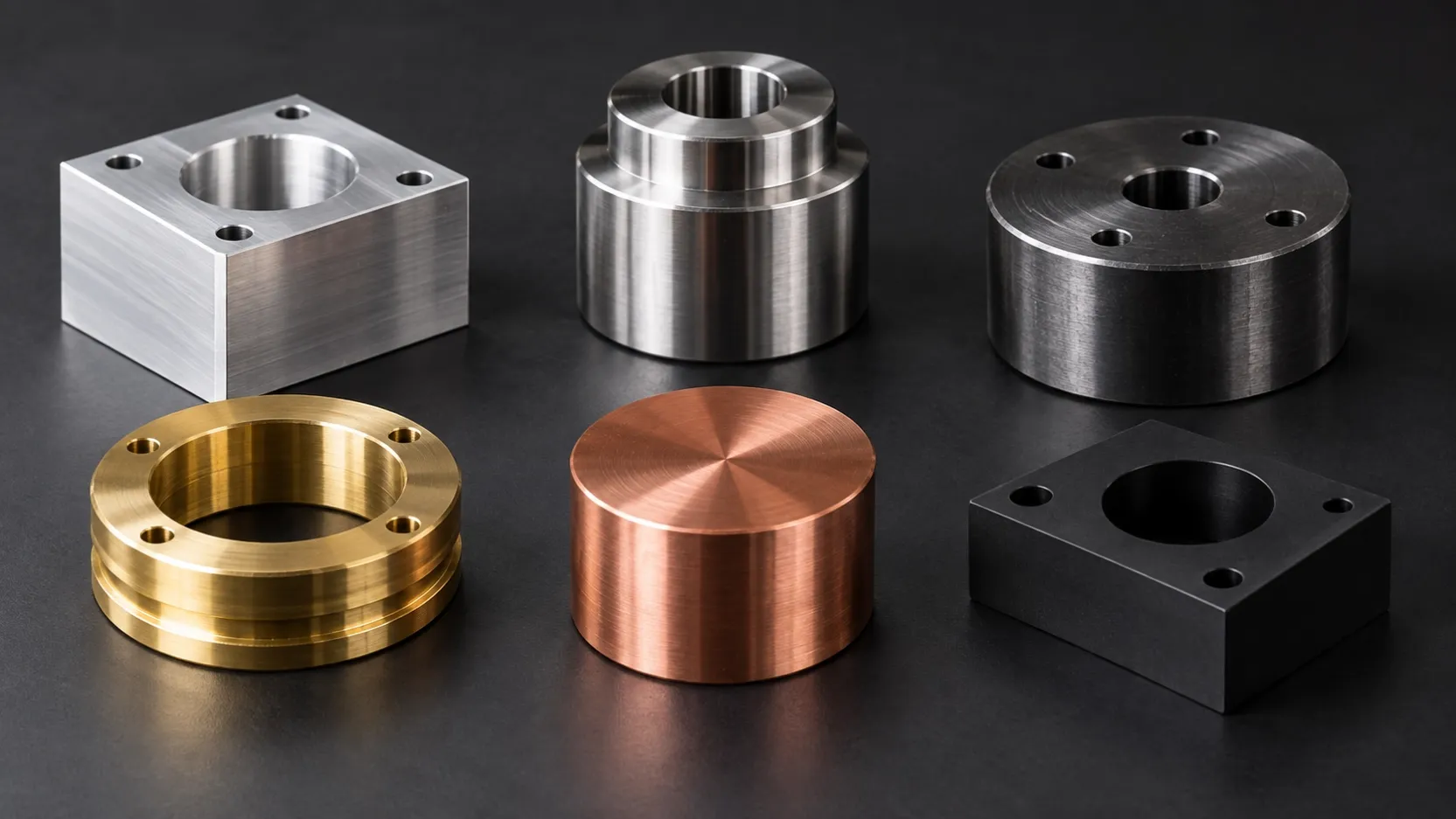
A valve component passed dimensional inspection and still failed the customer's pressure test. The dimensions were correct. The problem was a seal surface that was never specified for the pressure, and a material certificate that did not match the heat lot.
Energy components are not only precision parts. They are parts that must survive pressure, temperature, corrosive media, and sometimes a safety-critical duty. A part that measures correctly can still fail when it meets the service environment.
This guide is written for buyers and engineers who source CNC machined components for oil and gas, power generation, chemical processing, and industrial energy systems. It covers materials, corrosion, pressure and temperature, surface finish, inspection, documentation, and the questions to ask a supplier.
The Short Answer
Specify the material grade, condition, and certificate, the corrosive environment, the pressure and temperature, the seal surfaces and surface finish, the inspection and NDT requirement, and the documentation package. A pressure-containing part needs more than a dimensional check. Confirm the supplier's capability and the approved subcontractors before the order.
What Energy Components Demand
Energy equipment often works in an environment where a small defect has a large consequence.
The part may be exposed to chlorides, sour gas, CO2, acids, seawater, steam, or high temperature. It may need to hold pressure, seal against a flange, or resist erosion. It may need material traceability and a certificate that matches the heat lot. The machining, the material, the surface finish, and the inspection all matter.
A supplier that can machine a precise part but cannot control the material and the documentation is not an energy supplier. The process and the records are part of the product.
Common Energy Components We Machine
Energy machining covers a wide range of parts.
Valve bodies, bonnets, seats, and stems are common. Fittings, flanges, adapters, and manifolds connect the system. Bushings, sleeves, and shafts support moving parts. Sensor housings, brackets, and mounting plates hold instrumentation. Pump and compressor components, heat-exchanger parts, and pollution-control hardware are also common.
Each part has a different critical requirement. A valve body may be defined by the pressure boundary and the seal surfaces. A fitting may be defined by the thread, the seal face, and the material. A shaft may be defined by the diameter, the hardness, and the surface finish.
Materials for Corrosive and High-Temperature Service
The material must match the service environment, the pressure, the temperature, and the code.
316L stainless steel is common for corrosive and clean service. It offers good corrosion resistance and weldability, and it can be passivated. 17-4PH stainless steel offers higher strength and good corrosion resistance; the condition and heat treatment matter.
Inconel 625 and 718 are nickel alloys used for high temperature, aggressive chemicals, and seawater. They are more difficult to machine and more expensive, but they can be the right choice when stainless steel is not enough.
Titanium is used for seawater, chlorides, and applications that need a high strength-to-weight ratio. Brass and copper alloys are used for specific media and electrical components.
The material grade and the condition should be stated on the drawing and the purchase order. A generic "stainless steel" is not enough for a corrosive or pressure-containing part. The material certificate, the heat lot, and the traceability should be part of the documentation.
Corrosion and Environment
Corrosion is the most common cause of unexpected failure in energy components.
Chlorides can cause pitting and stress corrosion cracking in some stainless steels. Sour gas can cause sulfide stress cracking. CO2 can cause sweet corrosion. Acids and caustic media attack different materials. Seawater creates both corrosion and galvanic effects when dissimilar metals are joined.
The material selection should be based on the actual environment, not on a generic recommendation. The concentration, the temperature, the pressure, and the presence of oxygen or bacteria all matter. If the environment is uncertain, the buyer should ask the material supplier or a corrosion engineer.
Surface finish and passivation also affect corrosion. A rough surface can trap chlorides and create crevices. A contaminated surface can start pitting. Passivation, electropolishing, and proper cleaning improve the surface condition, but they do not replace the right alloy.
Galvanic corrosion is another risk. When two different metals are in contact in an electrolyte, the less noble metal can corrode faster. The design should consider insulation, coating, or material compatibility.
Pressure, Temperature and Seal Surfaces
Pressure-containing components need more than a dimensional inspection.
The wall thickness, the thread, the seal face, and the pressure boundary should be specified. The design code and the inspection requirement should be stated. A hydrostatic test or a leak test may be required; the test method and the acceptance criteria should be agreed before production.
Temperature affects the material strength, the corrosion rate, and the fit. A part that works at ambient temperature may not work at the service temperature. The material and the tolerance stack-up should be checked at the operating temperature.
Seal surfaces are critical. A scratch, a burr, or a rough surface can cause a leak. The flatness, the surface finish, and the seal groove should be specified with the inspection method. For a critical seal, a visual check is not enough.
Material Selection by Environment
Material selection starts with the environment, not with the alloy name.
For chlorides and seawater, 316L may be adequate at low temperature and low concentration, but pitting and stress corrosion cracking become a risk as the temperature and the chloride level rise. Titanium and nickel alloys may be required. The actual chloride level, the temperature, and the oxygen content should be stated.
For sour gas, the partial pressure of H2S, the pH, and the temperature determine the risk of sulfide stress cracking. The material and the hardness should meet the applicable standard. A generic stainless steel may not be acceptable.
For CO2 and wet gas, the corrosion rate depends on the CO2 partial pressure, the temperature, and the water chemistry. Carbon steel with inhibition may be used in some pipelines, but machined components often need a corrosion-resistant alloy.
For acids and caustic media, the concentration and the temperature drive the selection. The material supplier or a corrosion engineer should be consulted for critical service.
The buyer should share the actual environment, not a simplified description. "Seawater" is not enough; the chloride level, the temperature, the oxygen, and the presence of bacteria matter. "Sour service" is not enough; the H2S partial pressure and the pH matter.
Pressure-Containing Parts and Design Codes
A pressure-containing part must meet the design code, not only the drawing.
The applicable code may define the material, the wall thickness, the thread, the inspection, and the pressure test. The buyer should state the code and the required documentation. The supplier should confirm that it can meet the code and the inspection requirement.
The pressure test and the NDT should be planned before production. The test method, the pressure, the duration, and the acceptance criteria should be agreed. If the part requires a third-party inspection, the supplier and the buyer should agree on the inspector and the records.
A machined part can be dimensionally perfect and still fail the pressure boundary because of a material defect, a thread issue, or a seal surface. The pressure test and the material certificate are part of the product.
Tolerances and Inspection
Energy parts often have tight tolerances on features that affect fit, sealing, and pressure integrity. The achievable tolerance depends on the geometry, the material, the setup, and the inspection method.
A CMM can verify the critical dimensions and the datum scheme. Surface roughness should be measured with the specified cutoff and direction. For a seal surface, the flatness and the surface finish should be measured together.
If the part requires NDT, the method should be specified. Penetrant testing, ultrasonic testing, radiography, and hardness testing are common. The acceptance criteria and the approved subcontractor should be agreed before production. The buyer should confirm the supplier's scope for the required NDT.
Surface Finish and Special Processes
Surface finish and special processes are part of the corrosion and pressure performance.
Passivation removes free iron and promotes the passive layer on stainless steel. Electropolishing improves the surface finish and cleanliness. Coating can provide a barrier, but it must be compatible with the environment and the temperature. Plating can improve wear or corrosion resistance, but it can also introduce hydrogen embrittlement risk on high-strength steels.
The specification, the thickness, the masking, and the acceptance criteria should be stated on the drawing. The special process supplier should be approved, and the process record should be part of the documentation.
Documentation and Traceability
Energy components often require a documentation package that matches the risk.
A typical package includes the material certificate, the heat-lot traceability, the certificate of conformity, the dimensional inspection report, and the special-process records. For pressure-containing parts, the package may also include the pressure-test record and the NDT report.
The material certificate should identify the grade, the heat lot, the condition, and the specification. The certificate should match the material actually used. A certificate that lists only the alloy family is not enough.
Supplier Checklist for Energy Components
Ask these questions before placing the order.
Can you provide the material certificate with the grade, heat lot, and condition? Can you machine the required alloy and condition? What is your experience with the corrosive environment and the pressure requirement? How do you control the seal surfaces and the surface finish? What NDT and pressure-test capability do you have, and who performs it? What documentation can you provide? How do you control special processes and subcontractors? How do you control changes in material or process? Can you support a prototype and a production order? What is your lead time and capacity?
The answers should be specific. A supplier that says yes to everything without evidence is not an energy supplier.
What to Put in the RFQ
State the material grade, condition, and certificate requirement. State the corrosive environment, the pressure, the temperature, and the design code if applicable.
State the critical features, the seal surfaces, the surface finish, the inspection method, and the NDT requirement. State the documentation package and the change control requirement.
State the quantity, the delivery destination, and the packaging. If the part is pressure-containing or safety-critical, include the test and inspection requirements in the RFQ.
FAQ
What material is best for corrosive energy service?
It depends on the environment. 316L, 17-4PH, Inconel, titanium, and copper alloys are common, but the concentration, temperature, pressure, and contaminants determine the right choice. A corrosion engineer or material supplier should be consulted for critical service.
What is the difference between 316L and 17-4PH?
316L is an austenitic stainless steel with good corrosion resistance and weldability. 17-4PH is a precipitation-hardening stainless steel with higher strength; it is heat treated to the required condition. The right choice depends on the strength, the corrosion environment, and the heat-treatment capability.
Can you machine Inconel and other nickel alloys?
Yes. We machine Inconel 625 and 718, 316L, 17-4PH, titanium, brass, and copper alloys. Nickel alloys require a process designed for work hardening and tool wear.
Can you provide material certificates and heat-lot traceability?
Yes. Material certificates, heat-lot traceability, inspection reports, and certificates of conformity can be included. The documentation package should be agreed before production.
Can you support pressure testing or NDT?
Pressure-test and NDT requirements are reviewed with the buyer and the approved subcontractor. The test method, the acceptance criteria, and the records should be stated in the RFQ.
How do you prevent leaks on seal surfaces?
The seal surface should be specified with the flatness, the surface finish, and the inspection method. The machining process should control burrs and scratches. For critical seals, a pressure or leak test may be required.
Choosing an Energy Machining Supplier
An energy supplier should understand the environment, the pressure, the material, and the documentation. The supplier should be able to discuss the corrosion risk, the seal surfaces, the NDT, and the traceability in specific terms.
Zync Precision is an ISO 9001 and IATF 16949 certified manufacturer of custom CNC machined parts for medical, aerospace, consumer electronics, and automotive applications. We machine 316L, 17-4PH, Inconel 625/718, titanium, brass, and copper alloys for energy and industrial systems, with material traceability, dimensional inspection, and production support. Our engineering team reviews drawings, materials, pressure and temperature requirements, surface finishes, and delivery, and responds to quote requests within 24 hours. If you are sourcing energy components, send your drawing, material, pressure/temperature, surface finish, inspection requirement, quantity, and destination.
Request a CNC machining quote and let us review your energy project.