CNC O-Ring Grooves: What to Specify Before Requesting a Quote
Prepare an O-ring groove machining RFQ with seal identification, gland geometry, mating parts, surface requirements and inspection scope to reduce sealing ambiguity.
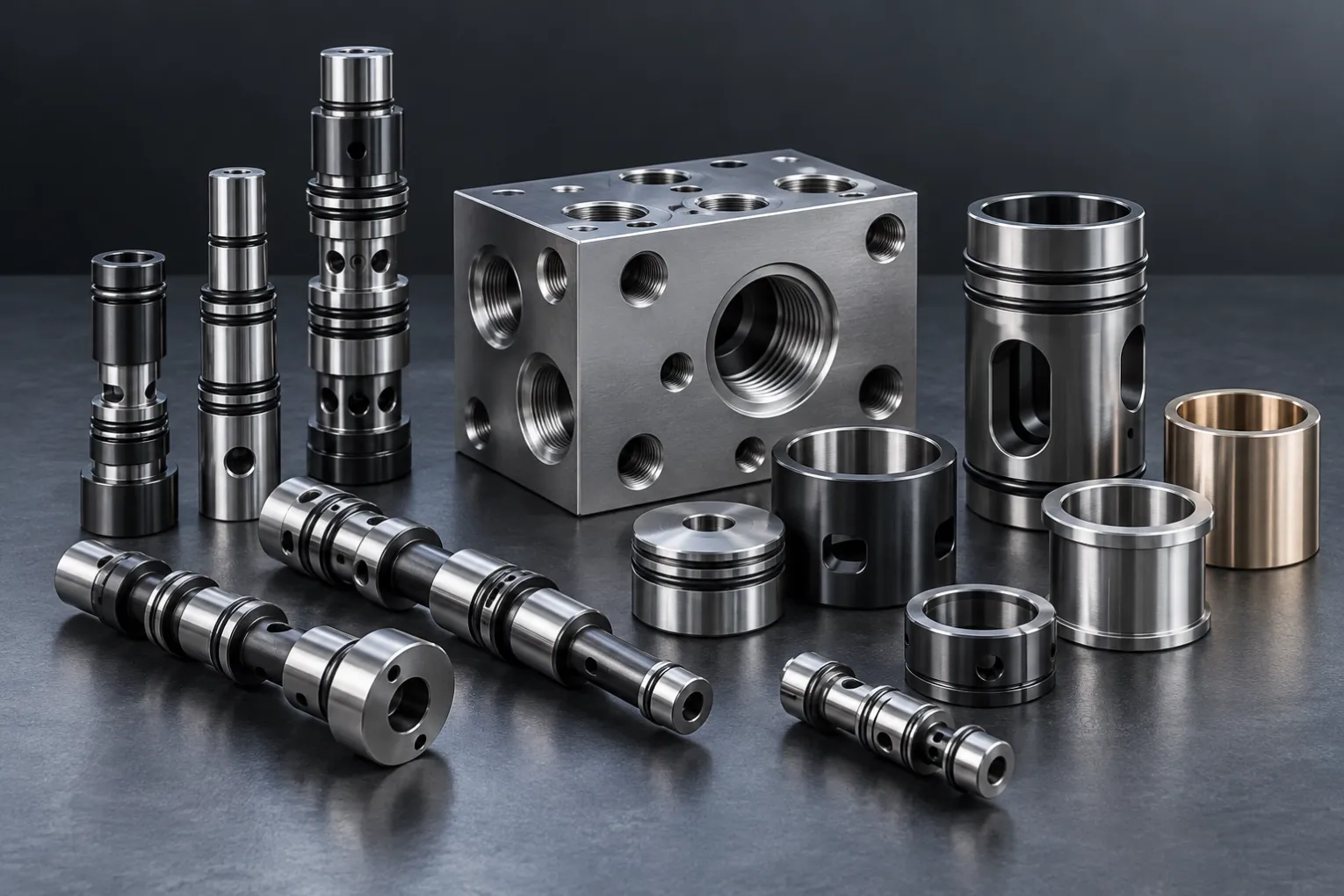
A reliable quote for a CNC machined O-ring groove needs more than the seal diameter. Send the approved groove geometry, seal identification, mating-part information, final surface requirements and inspection scope. State whether the seal is static or dynamic, and flag any unfinished design decisions before a supplier prices the work.
This is a purchasing and drawing-review checklist, not a universal seal-design calculation. The seal manufacturer’s guidance and your engineering approval should govern the gland design for the actual pressure, temperature, medium and motion.
Why the O-ring part number is only the starting point
The same general seal size can be used in different configurations. A face seal, a radial static seal and a moving seal do not automatically share a groove design.
The Parker O-Ring Handbook treats gland design and surface requirements by application. Use the relevant seal supplier’s approved information rather than transferring a groove from an unrelated assembly.
For quotation, distinguish between a groove that is already designed and a request to help clarify an incomplete drawing. Manufacturing review should not be mistaken for validated sealing performance.
Send the information that defines the interface
Your RFQ should identify:
- Seal manufacturer, part number and controlled seal specification where applicable.
- Seal material or compound and hardness required by the approved design.
- Static or dynamic operation and the intended assembly arrangement.
- Operating medium, temperature and pressure range where needed for review.
- Approved groove dimensions and tolerances.
- Mating component geometry, clearances and relevant revisions.
- Required coating or treatment, including the final dimensional condition.
- Cleaning, inspection and documentation requirements.
If some information is confidential, arrange an appropriate exchange before sending it. If it is unknown, label it as unknown rather than letting an assumption become part of the order.
Which drawing details deserve individual attention?
| Item | Buyer question | What to include |
| Groove width and depth | Are these dimensions complete and toleranced? | Approved dimensions and reference surfaces |
| Diameter and location | How is the groove related to the mating part? | Datums and applicable geometric controls |
| Corner and edge geometry | Could installation damage the seal? | Approved radii, entry geometry and protected edges |
| Surface condition | Which areas actually contact the seal? | Relevant texture callouts and surface-defect criteria |
| Finishing | Does coating affect the final fit? | Masking, allowances and after-finish acceptance |
| Inspection access | Can the selected method reach the feature? | Required evidence and agreed method |
Do not substitute a general finish note for all sealing details. Similarly, a tighter dimension is not a substitute for a missing entry-edge requirement.
Define the condition after finishing
If the part will be anodized, plated or otherwise treated, make clear whether dimensions are accepted before or after that operation. Identify surfaces to mask and any areas where subsequent machining would be unacceptable.
The machining supplier and finishing provider need consistent instructions. A quotation based on an unfinished groove should not be compared directly with one including final finishing, post-treatment checks and cleaning.
Ask which process assumptions are included and which need customer approval. Do not allow a proposed allowance or masking change to alter the approved sealing interface without engineering review.
Make the inspection plan specific
Ask how groove geometry and the relevant surface condition will be checked. A dimension recorded on a report does not automatically establish edge condition, cleanliness or sealing performance.
For a first article, consider a record that connects each critical groove characteristic to its drawing requirement and result. Agree whether the scope covers one part, several parts or a production sampling plan. The scope should match the purchase requirement and the risk of the application.
A leak test is a separate requirement. If required, define the assembly, medium, pressure, duration, acceptance limit and responsibility through the appropriate engineering procedure. Do not assume that dimensional inspection includes leak testing.
Example: machining a groove before the finish is decided
Illustrative scenario, not a Zync project: a prototype gland is machined successfully, but the buyer adds a surface treatment for the production order without revisiting the interface.
The right next step is a controlled review of final geometry, masking, surface condition and acceptance stage. Repeating the prototype machining program alone does not demonstrate that the finished assembly meets its sealing requirement.
A ready-to-send quotation brief
“Please review the attached controlled drawing and CAD model for part [number/revision]. The approved seal is [identification]. The application is [static/dynamic; arrangement]. Required quantity is [quantity]. Groove and mating-part requirements are defined in [documents]. Final finish is [specification], with acceptance [before/after finish]. Please identify any missing geometry, inspection-access issues and quotation assumptions before pricing. Leak testing is [required/not included/to be confirmed] under [procedure if applicable].”
This brief keeps the quotation focused on a defined manufacturing scope and exposes missing decisions early.
Frequently asked questions
Can I ask the machining supplier to choose the groove from an O-ring size?
You can request a review, but do not treat a proposed groove as approved automatically. Confirm who owns the design and who validates it for the application.
Does a dimensionally correct groove guarantee no leaks?
No. Seal selection, mating surfaces, assembly, service conditions and the agreed validation procedure also matter.
Must I specify the same surface finish everywhere?
Use requirements appropriate to each surface and function. Identify the seal-contact areas explicitly and use the approved design guidance.
Request a drawing-based machining review
Send Zync Precision your groove drawing, mating-part details, material, finish, quantity and inspection expectations through the CNC machining quote form. Use “O-ring groove RFQ” in the project description and list the items that still need clarification.
You can also review the custom machining product and service range before discussing the manufacturing scope.