
News & InsightsFeaturedIn-Depth
2026年3月11日
CNC Machining vs. MIM: Which is Better for Your Project?
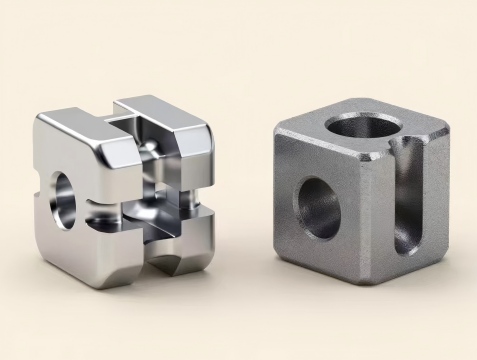
Struggling to choose between CNC machining and MIM? This guide compares cost, volume, and precision to help you find the most cost-effective manufacturing solution for your custom metal parts.
Introduction: The Million-Dollar Manufacturing Decision
Choosing between CNC Machining and Metal Injection Molding (MIM) can be a critical decision for your project's budget and timeline. While both processes produce high-quality metal parts, they serve very different purposes. Are you overpaying for precision, or are you missing out on the cost-savings of mass production?
In this guide, we’ll break down the core differences to help you choose the right path for your custom components.
Understanding the Basics
Before diving into the comparison, let’s define each process:
- CNC Machining: A subtractive process where material is removed from a solid block using high-speed cutting tools. It is the gold standard for precision and flexibility.
- MIM (Metal Injection Molding): A near-net-shape process that combines plastic injection molding technology with metal powder. It is designed for complex, small parts in high volumes.
Key Comparison Factors
1.Production Volume
This is the biggest differentiator.
- CNC Machining is ideal for low-to-medium volumes (1 to 1,000 parts). There is no expensive tooling required, so you can start immediately.
- MIM is built for high-volume production (typically 5,000+ parts). While the initial mold cost is high, the price per unit drops significantly as volume increases.
2.Part Complexity and Size
- CNC can handle large parts but struggles with extremely intricate internal geometries without multiple setups.
- MIM excels at tiny, complex parts (like smartphone hinges or medical tools) that would be nearly impossible or too expensive to machine one by one.
3.Tolerances and Precision
- CNC Machining wins here. It can achieve tolerances as tight as ±0.005mm.
- MIM typically achieves ±0.3% to ±0.5% of the dimension. For tighter tolerances, MIM parts often require secondary CNC machining.
CNC vs. MIM: Quick Comparison Table
Feature | CNC Machining | Metal Injection Molding (MIM) |
Best Volume | 1 - 1,000 pcs | 5,000+ pcs |
Initial Cost | Low (No tooling) | High (Mold required) |
Part Size | Small to Large | Small (typically<200g) |
Complexity | Limited by tool access | Extremely High |
Lead Time | Fast (Days) | Slow (Weeks for tooling) |
Conclusion: Which One Should You Choose?
The choice depends on your specific needs:
- Choose CNC Machining if you need high precision, have a low-volume requirement, or need parts made from a specific solid alloy quickly.
- Choose MIM if you have a complex small part and need to produce tens of thousands of units at the lowest possible cost.
At Huasheng Precision, we offer both CNC and MIM services, ensuring you get the most efficient manufacturing solution regardless of your project's scale.
FAQ: Common Questions About CNC and MIM
Q: Can MIM parts be as strong as CNC machined parts?
A: Yes. MIM parts achieve 96%-99% density and offer mechanical properties nearly identical to wrought metal.
Q: Is it possible to combine both processes?
A: Absolutely. We often use MIM for the base shape and CNC for high-precision features like threads or critical bores.
Q: Which process is better for prototyping?
A: CNC is almost always better for prototyping because it doesn't require a custom mold, saving you thousands of dollars in the early stages.