CNC Machining Guides
CNC Machining for Semiconductor Equipment
A buyer's guide to CNC machined semiconductor equipment parts: materials, surface finish, cleaning, vacuum compatibility, inspection and supplier qualification.
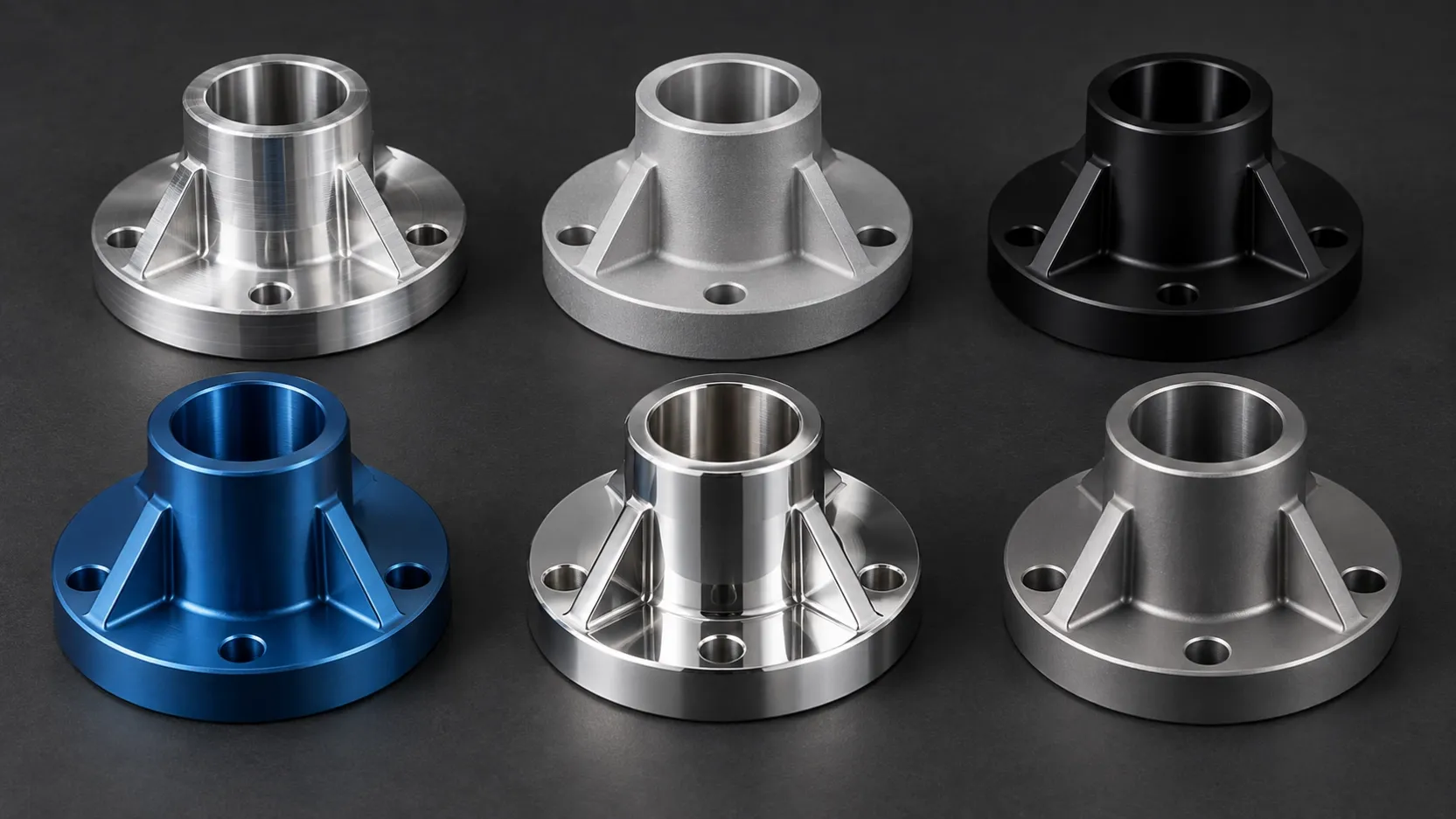
A gas-path manifold passed dimensional inspection and still failed at the customer's contamination check. The dimensions were correct. The problem was a surface finish and cleaning requirement that was never specified: a machined pocket held particles that the customer's process could not tolerate.
Semiconductor equipment parts are not only precision parts. They are parts that must be clean, vacuum-compatible, corrosion resistant, and traceable. A part that looks perfect can still fail when it meets the process gas, the wafer environment, or the customer's particle specification.
This guide is written for engineers and buyers who source CNC machined components for semiconductor equipment, vacuum systems, gas delivery, wafer handling, and cleanroom automation. It covers the materials, surface finish, cleaning, vacuum considerations, inspection, documentation, and the questions to ask a supplier.
The Short Answer
Specify the material grade and condition, the surface finish by function, the cleaning and residue requirement, the vacuum or leak requirement, the inspection method, and the documentation package. Do not use a general machining note for a cleanroom or vacuum part. Confirm the supplier's experience with the material, the surface treatment, the cleaning process, and the quality records before placing the order.
What Semiconductor Equipment Parts Demand
Semiconductor equipment parts often work in an environment where small defects have large consequences.
The part may be exposed to corrosive process gases, plasma, high temperature, or repeated cleaning. It may need to hold vacuum, seal against a gas line, or avoid particle shedding. It may need to be clean enough for a cleanroom, and traceable enough for a customer audit. The machining, the surface finish, the cleaning, and the packaging all matter.
A supplier that can machine a precise part but cannot control the surface and the cleanliness is not a semiconductor supplier. The process and the documentation are part of the product.
Common Parts We Machine
Semiconductor equipment uses a wide range of machined components.
Gas delivery components include manifolds, gas lines, fittings, valve bodies, and mixing blocks. Vacuum components include chamber parts, mounting plates, feedthrough housings, and seal interfaces. Wafer handling components include end effectors, grippers, lift pins, and support plates. Equipment frames and modules include brackets, adapter plates, sensor mounts, and precision fixtures. Insulators and chemical-resistant parts may be machined from engineering plastics.
Each part has a different critical requirement. A gas manifold may be defined by the internal surface finish and the seal surfaces. A wafer-handling end effector may be defined by flatness, weight, and particle control. A chamber plate may be defined by flatness, vacuum sealing, and corrosion resistance.
Materials for Semiconductor Equipment
The material must match the process environment, the cleaning chemistry, and the mechanical requirement.
Aluminum alloys such as 6061 and 7075 are common for structural parts, chamber components, and wafer-handling hardware. They are light and machinable, and they can be anodized. The alloy, temper, and anodizing specification should be stated.
316L stainless steel is used for gas lines, fittings, and components that need corrosion resistance and cleanability. Passivation and electropolishing are common surface treatments. The material certificate and the surface treatment record should be part of the documentation.
Titanium is used where corrosion resistance and strength-to-weight ratio matter. It is more expensive and more difficult to machine, but it can be the right choice for aggressive environments.
Engineering plastics such as PEEK, PTFE, and PVDF are used for chemical resistance, electrical insulation, and low-friction components. The grade matters. PTFE can cold-flow under load; PEEK has better mechanical properties; PVDF has good chemical resistance. The application and the cleaning chemistry should drive the choice.
Surface Finish and Cleanliness
Surface finish is a functional requirement in semiconductor equipment, not a cosmetic one.
A rough surface can trap particles, hold moisture, or create a path for corrosion. A surface that is too smooth can affect sealing or coating adhesion. The right finish depends on the function: a gas-path surface, a seal surface, a wafer-contact surface, and a structural surface may have different requirements.
Ra is the common roughness parameter, but it does not tell the whole story. Rz and Rmax may matter for sealing and particle retention. The measurement direction and the cutoff should be specified for critical surfaces.
Electropolishing is used on stainless steel to improve corrosion resistance and cleanliness. Passivation removes free iron and promotes the passive layer. Anodizing is used on aluminum for corrosion and wear resistance; the coating thickness and the masking should be specified. Bead blasting can embed media or leave a texture that traps particles; it should be specified only where it is acceptable.
Cleaning is part of the manufacturing process. Machining residue, polishing compound, and handling contamination must be removed. The cleaning method, the residue limit, and the packaging should be agreed before production. For critical parts, the customer may require a cleaning record or a particle test.
Vacuum and Leak Integrity
Vacuum parts need more than a good surface finish. They need seal surfaces that are flat and defect-free, and a material and process that do not create leaks or outgassing.
A seal groove with a burr, a scratch, or a porous surface can leak even when the dimensions are correct. The machining process should control the seal surface, and the inspection should verify it. For critical parts, a helium leak test or another agreed method may be required.
Outgassing matters for polymers and for surfaces that will be exposed to vacuum. The material grade and the cleaning process should be selected for the vacuum requirement. A general-purpose plastic may not be suitable.
Process Gases, Corrosion and Material Compatibility
Semiconductor equipment parts may be exposed to process gases, plasma, cleaning chemicals, and moisture. The material and the surface treatment must be compatible with that environment.
Aluminum is common for structural and chamber parts, but it can be attacked by some process chemistries. Anodizing can improve corrosion resistance, but the coating must be specified and the coated surfaces must be compatible with the process. Stainless steel is often selected for gas lines and corrosive service; passivation and electropolishing improve the surface condition, but the alloy grade and the cleaning chemistry still matter.
Engineering plastics have different chemical resistance profiles. PTFE is chemically resistant but can cold-flow and may have outgassing considerations. PEEK offers better mechanical properties; PVDF offers good chemical resistance. The grade and the application should be reviewed with the material supplier.
The buyer should state the process gas, the cleaning chemistry, the temperature, and the moisture exposure. A material that works in one process may fail in another. Do not assume that a "semiconductor-grade" material is compatible with every process.
Cleanroom Packaging and Handling
A clean part can become contaminated during packaging and handling. The packaging and the handling procedure are part of the cleanliness requirement.
For cleanroom parts, the supplier and the buyer should agree on the cleaning method, the drying method, the inspection, the bagging, and the labeling. Double-bagging, cleanroom-compatible bags, and particle-free gloves are common. The part should be handled in a controlled area after cleaning, and the package should be sealed and labeled with the cleaning date and the lot.
If the part requires a particle test or a residue test, the sampling method and the acceptance criteria should be defined before production. A visual check under normal light is not a particle test.
Tolerances and Inspection
Semiconductor equipment parts often have tight tolerances on flatness, parallelism, position, and seal surfaces. The achievable tolerance depends on the geometry, the material, the setup, and the inspection method.
A CMM can verify the critical dimensions and the datum scheme. Surface roughness should be measured with a profilometer using the specified cutoff and direction. Flatness and parallelism may need a surface plate or a CMM, depending on the part.
For thin or flexible parts, the inspection condition should be defined. A part that is measured in a free state may not match the part as installed. If the function depends on the installed condition, the inspection should simulate it.
Documentation and Quality System
The documentation package should match the risk of the part.
A typical package includes the material certificate, the certificate of conformity, the first article inspection report, the dimensional inspection report, and the surface treatment record. For critical parts, the customer may also require a cleaning record, a particle test, a leak test, or a traceability record for the lot.
Zync Precision holds ISO 9001 and IATF 16949 certifications. If the program requires a specific semiconductor quality standard or a customer-specific audit, confirm the supplier's scope and the required documentation before the order.
Supplier Checklist for Semiconductor Equipment Parts
Ask these questions before placing the order.
Can you machine the material grade and condition I specified? Can you achieve and verify the surface finish on the critical surfaces? What is your cleaning process, and can you provide a residue or particle record? Can you control the seal surfaces and support a leak test if required? What is your inspection method for flatness, position, and surface roughness? Can you provide the material certificate, FAI, and surface treatment records? How do you control particles and packaging? Have you made a part with a similar material, finish, and cleanliness requirement? Can you support a prototype and a production ramp? What is your change control process?
The answers should be specific. A supplier that says yes to everything without evidence is not a semiconductor supplier.
What to Put in the RFQ
State the function of the part: gas path, vacuum, wafer handling, structural, or insulation. State the material grade and condition, the surface finish by surface, the cleaning and residue requirement, and the vacuum or leak requirement.
State the critical dimensions, the datum scheme, the inspection method, and the documentation package. If the part will be anodized, passivated, electropolished, or coated, state the specification and the masking.
State the quantity, the delivery destination, and the packaging requirement. If the part needs cleanroom bagging or a particle test, include it in the RFQ.
FAQ
Can you machine cleanroom-compatible parts?
Yes, but the cleaning and packaging requirements must be specified. We review the material, surface finish, cleaning method, and documentation before quoting.
What surface finish is needed for a vacuum seal?
It depends on the seal type, the pressure, and the surface texture. Ra alone may not be enough; Rz, Rmax, flatness, and the seal surface condition should be considered. The seal supplier's recommendation is a good starting point.
Can you electropolish or passivate stainless steel parts?
Yes, through approved surface-treatment suppliers. The specification, the masking, and the inspection should be agreed before production.
What is the difference between passivation and electropolishing?
Passivation is a chemical treatment that removes free iron and promotes the passive oxide layer on stainless steel. Electropolishing removes a thin layer of metal electrochemically, improving the surface finish and cleanliness. They can be used together, depending on the specification.
Can you machine parts for high-purity gas lines?
Yes, but the material, the internal surface finish, the cleaning, and the packaging must be specified. High-purity gas components often require a controlled surface, a cleaning record, and a leak test. Confirm the requirements before quoting.
Do you hold semiconductor-specific certifications?
Zync Precision holds ISO 9001 and IATF 16949. If your program requires a specific semiconductor standard or customer audit, confirm the supplier scope and the required documentation before ordering.
Can you support a prototype and production?
Yes. We machine prototypes, bridge production, and repeat orders, with the same inspection discipline and documentation review.
Choosing a Semiconductor Equipment Machining Supplier
A semiconductor supplier should understand the process environment, not just the drawing. The supplier should be able to discuss the material, the surface finish, the cleaning, the vacuum requirement, the inspection, and the documentation in specific terms.
Zync Precision is an ISO 9001 and IATF 16949 certified manufacturer of custom CNC machined parts for medical, aerospace, consumer electronics, and automotive applications. We machine aluminum, stainless steel, titanium, and engineering plastics for semiconductor equipment, vacuum systems, gas delivery, and wafer handling, with material traceability, dimensional inspection, and production support. Our engineering team reviews drawings, materials, tolerances, surface finishes, cleaning requirements, and delivery, and responds to quote requests within 24 hours. If you are sourcing semiconductor equipment components, send your drawing, material, surface finish, cleaning requirement, inspection requirement, quantity, and destination.
Request a CNC machining quote and let us review your semiconductor project.