Oct 8, 2026CNC Machining Guides
CNC Machining Lead Time: What Affects Delivery and How Buyers Can Reduce Delays
Learn what affects CNC machining lead time, from drawings and material to programming, tooling, inspection, finishing, capacity, shipping, and buyer approval delays.
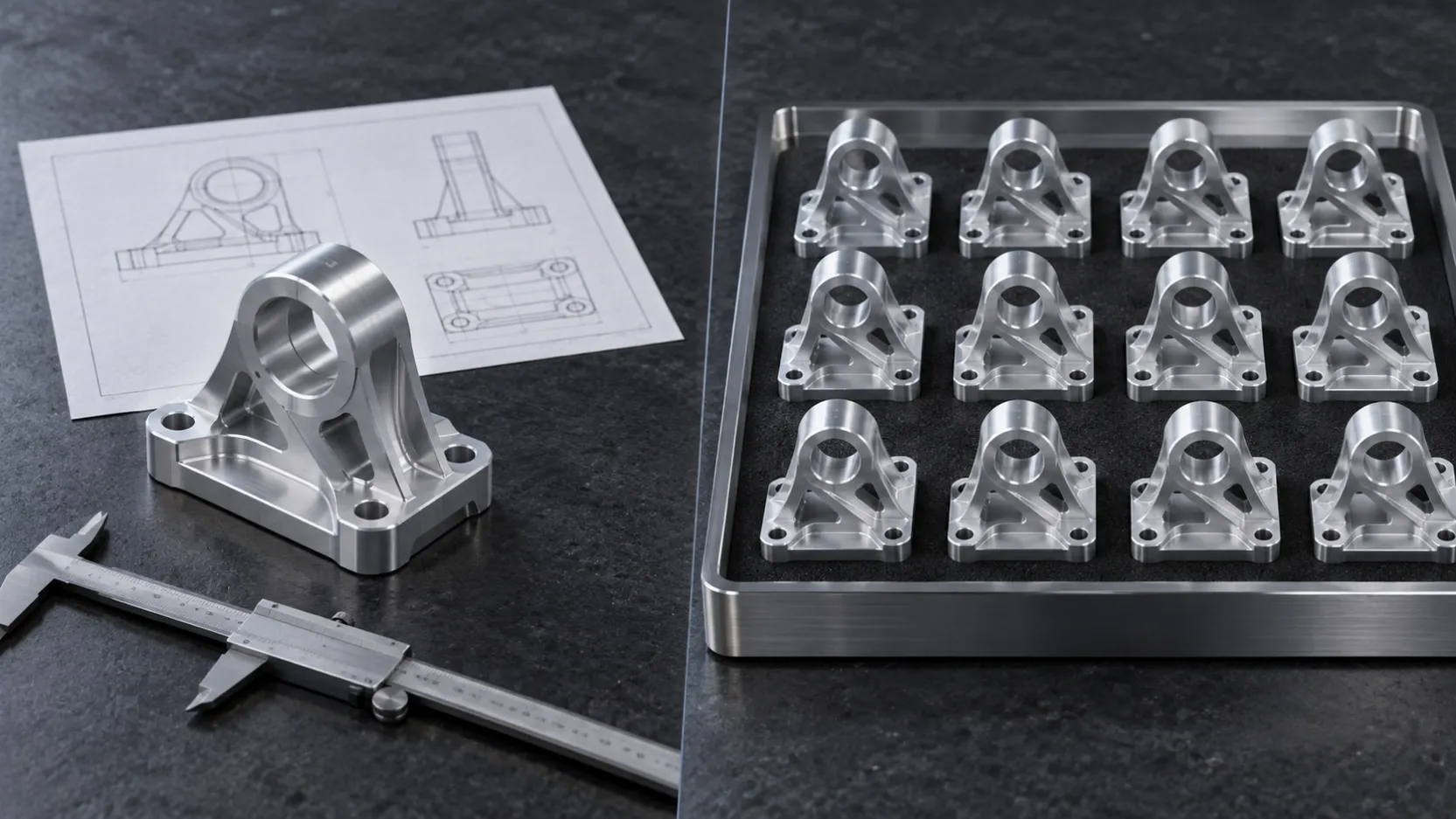
CNC machining lead time is more than the number of days a machine spends cutting metal. A reliable delivery schedule begins with complete technical information and includes engineering review, material procurement, programming, tooling, setup, machining, inspection, finishing, packaging, and shipping.
When buyers understand these stages, they can compare supplier promises more accurately and remove many avoidable delays before placing an order.
What Does CNC Machining Lead Time Include?
Lead time usually starts after the supplier receives a confirmed purchase order, approved drawing revision, complete technical requirements, and any required deposit. The exact starting point should be written in the quotation.
A typical order may include:
• Technical and manufacturability review
• Material purchasing and preparation
• Programming and process planning
• Fixture and tooling preparation
• First-piece machining and approval
• Batch production
• Inspection and documentation
• Surface finishing or heat treatment
• Final inspection, packaging, and dispatch
A quoted production time that excludes material, finishing, or approval time is not the same as a complete delivery lead time.
- Drawing and RFQ Completeness
Incomplete drawings are one of the most common causes of delay. Missing tolerances, unclear datums, conflicting 2D and 3D data, undefined finishes, and uncertain inspection requirements prevent the supplier from finalizing the process.
Provide the current drawing revision, 3D model, material grade, quantity, surface finish, inspection scope, documentation needs, and delivery destination. Identify critical features and clarify which file controls if the model and drawing differ.
Fast answers during the quotation and engineering-review stage can save more time than asking the supplier to rush production later.
- Material Availability
Common aluminum, stainless steel, carbon steel, and engineering plastic grades may be available locally. Special alloys, certified aerospace materials, large stock sizes, or unusual conditions may require longer procurement.
Material certification, heat numbers, country-of-origin requirements, or customer-approved mills can also affect availability.
Ask the supplier to separate material procurement time from manufacturing time. For repeat orders, forecasts or material reservations may shorten future deliveries.
- Part Complexity and Number of Setups
Simple turned components can often be produced faster than parts requiring several milling operations, deep pockets, compound angles, or tight relationships between multiple faces.
Each setup adds loading, alignment, probing, and verification. Four-axis or five-axis machining may reduce setups for suitable geometries, but the supplier still needs an appropriate machine, fixture, tools, and inspection plan.
A realistic schedule should reflect the complete route, not only the fastest cutting operation.
- Programming, Tooling, and Fixtures
New parts require process planning and CNC programming. Complex components may need simulation, collision checks, custom soft jaws, dedicated fixtures, special cutters, or inspection gauges.
Prototype work can use flexible workholding, while repeat production may justify fixtures that reduce setup time. Ask whether the quoted lead time includes fixture design and manufacturing.
If a part will be reordered, retaining approved programs and fixtures can make later batches faster and more consistent.
- Tolerances and Surface Finish
Tight tolerances, geometric controls, thin walls, and demanding surface finishes can require slower machining, extra passes, thermal stabilization, intermediate inspection, grinding, honing, or lapping.
Applying tight tolerances to every dimension adds time without necessarily improving function. Separate critical-to-function dimensions from general features and use practical tolerances where possible.
Surface roughness requirements should specify the relevant surfaces and measurement method.
- First-Article and Approval Requirements
Some projects require a first article before full production. The supplier machines an initial part, completes inspection, and waits for customer approval.
The approval period must be included in the schedule. If the buyer takes five days to review the report, the final delivery may move by five days.
Agree in advance on report format, measured characteristics, sample quantity, and approval contact. Set a clear response deadline for both parties.
- Inspection and Documentation
Inspection may include in-process checks, final inspection, CMM reports, full dimensional reports, certificates, surface roughness results, thread verification, material traceability, or PPAP documents.
The time required depends on the number of characteristics and reporting detail. Define documentation before production. Adding a full report after machining is complete may create a new queue and require parts to be measured again.
- Surface Finishing and Subcontract Processes
Anodizing, passivation, plating, heat treatment, grinding, coating, polishing, laser marking, and other external processes can add several days or weeks.
Finishing capacity, batch schedules, color matching, masking, thickness, and reinspection all affect delivery. Confirm whether the supplier controls these processes and whether the quoted lead time includes transport to and from the finishing source.
Critical dimensions may need final inspection after finishing.
- Production Quantity
Higher quantity increases machining and inspection time, but unit efficiency may improve after setup. The best delivery strategy is not always one final shipment.
Ask whether partial delivery is possible. A supplier may ship an urgent initial quantity after first-article approval and complete the remaining batch afterward.
For recurring orders, smaller scheduled releases can provide a more stable supply than repeated emergency orders.
- Supplier Capacity and Scheduling
Machine capability and machine availability are different. A supplier may own suitable equipment but have it committed to other work.
Ask when production can start, which major process is on the critical path, and whether the delivery date is based on current capacity. A professional supplier should communicate capacity risks before accepting the order.
Repeated changes after order confirmation may require rescheduling.
- Engineering Changes
Drawing revisions after programming or production begins can affect material, tools, fixtures, inspection plans, and completed work.
Use formal revision control. Clearly identify changed dimensions and confirm whether existing parts can be used, modified, or must be scrapped. Request updated cost and lead-time impact before approving the change.
- Packaging, Export, and Shipping
Production completion is not the same as customer receipt. Packaging design, export documentation, customs, pickup schedules, air freight, and sea freight affect total delivery.
Provide the delivery address and required Incoterm during quotation. State whether the requested date means factory completion, shipment date, or arrival date.
How Buyers Can Reduce CNC Machining Delays
• Send complete and consistent technical files
• Identify critical dimensions and realistic tolerances
• Confirm material and finishing standards early
• Reply quickly to engineering questions
• Approve first-article reports within an agreed time
• Avoid unnecessary revisions after production starts
• Share forecasts for repeat orders
• Accept partial deliveries when appropriate
• Confirm packaging and shipping requirements early
• Use one responsible contact for technical approvals
Questions to Ask About Lead Time
• When does the quoted lead time officially start?
• Is material procurement included?
• Are fixtures and special tools included?
• Is first-article approval required?
• Are inspection reports and certificates included?
• Is finishing included in the schedule?
• Can urgent quantities ship first?
• What customer approvals are on the critical path?
• What events could change the delivery date?
• Does the date refer to completion, dispatch, or arrival?
Rush Orders: What Buyers Should Know
A rush order may require overtime, priority machine allocation, expedited material, or premium finishing and freight. Before paying an expedite fee, confirm which stage is being shortened and what remains outside the supplier’s control.
Rushing cannot eliminate missing technical information, unavailable material, required customer approval, or mandatory process time. A credible supplier should explain the compressed plan and its risks.
Frequently Asked Questions
How long does CNC machining normally take?
Simple prototypes using available material may be completed quickly, while complex production orders with special material, finishing, and documentation take longer. The drawing and complete process route determine the realistic schedule.
Why did the delivery date change after ordering?
Common reasons include late technical clarification, drawing revision, material delay, first-article approval, finishing queues, inspection findings, or added requirements. The supplier should document the reason and revised recovery plan.
Can five-axis machining reduce lead time?
It can reduce setups for suitable parts, but only when machine availability, programming, workholding, tooling, and inspection support the process.
Is partial delivery useful?
Yes. It can support urgent assembly, testing, or launch needs while the remaining quantity continues through production.
Plan Your CNC Machining Delivery with Zync Precision
Send Zync Precision your drawing, 3D model, material, quantity, tolerances, finish, inspection scope, and required arrival date. We will review the complete process route, identify lead-time risks, and propose a practical production and delivery plan.