Oct 8, 2026CNC Machining Guides
CNC Machining Cost Breakdown: What Buyers Should Compare in a Quote
Understand CNC machining cost drivers, including material, setup, cycle time, tolerances, inspection, finishing, quantity, lead time, and supplier quotation differences.
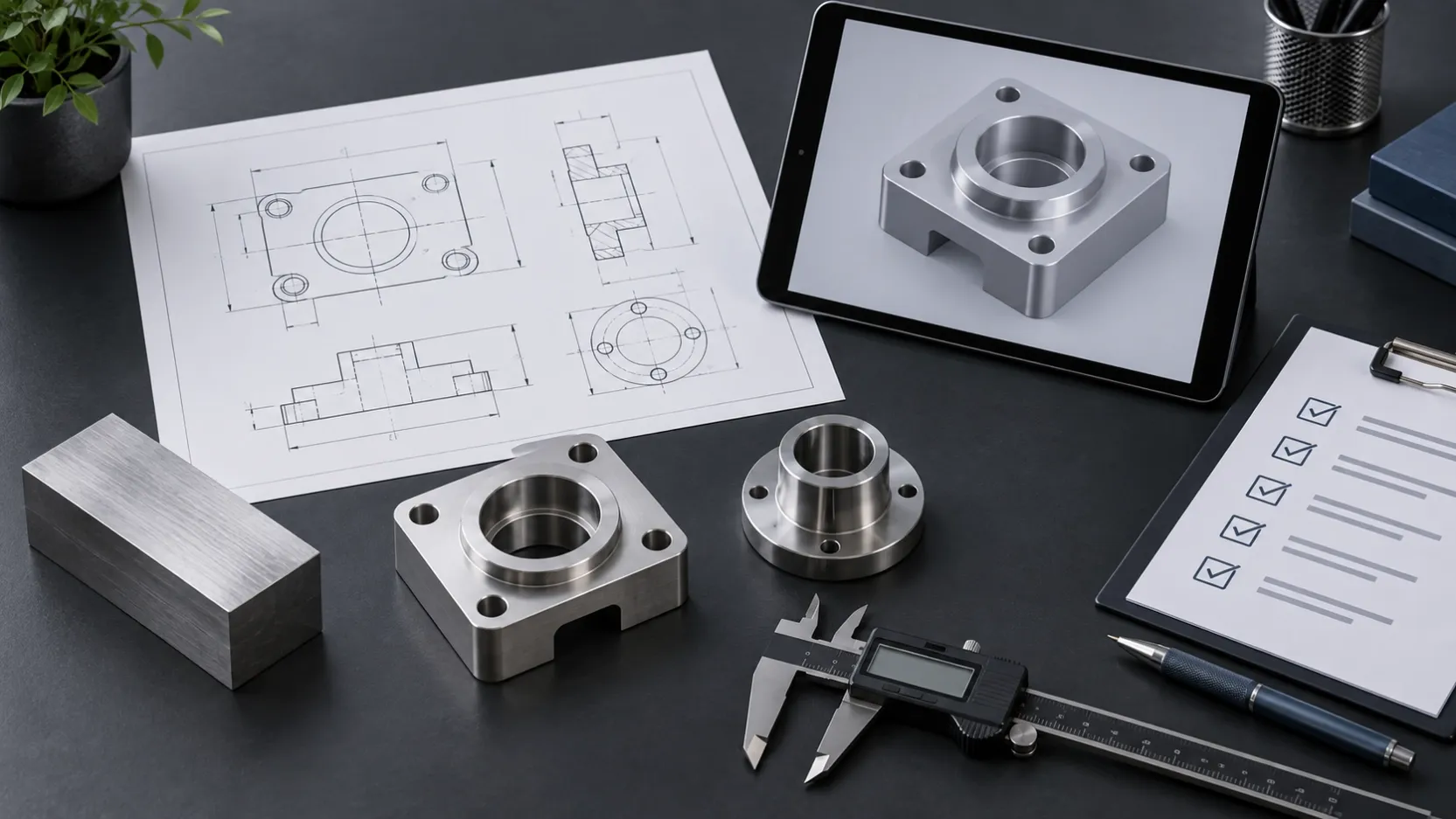
When buyers compare CNC machining quotations, the lowest unit price is not always the lowest total cost. Two suppliers may quote the same drawing at very different prices because they have made different assumptions about material, setup, tolerances, inspection, finishing, packaging, or delivery.
A useful quotation should make those assumptions visible. This guide explains the main CNC machining cost drivers and the questions buyers should ask before selecting a supplier.
What Determines CNC Machining Cost?
CNC machining cost normally includes raw material, engineering review, programming, setup, machine cycle time, cutting tools, workholding, inspection, finishing, packaging, logistics, and production risk. The importance of each item changes with part geometry, quantity, material, tolerance, and quality requirements.
- Material Cost
Material price depends on grade, condition, stock size, certification, and purchase quantity. A small finished part may require a much larger block or bar because enough stock is needed for workholding and machining allowance.
Specify the exact standard—for example aluminum 6061-T6, stainless steel 316L, alloy steel 4140 pre-hardened, or a defined engineering plastic grade. State whether material certificates and lot traceability are required.
Material utilization also matters. Parts with large pockets can remove most of the original stock. Near-net stock, forgings, castings, or extrusions may reduce waste at higher volumes, but they can add tooling and minimum-order requirements.
- Programming and Setup
Before machining, the supplier reviews the drawing, plans operations, creates toolpaths, selects tools, prepares workholding, and verifies the first part. These activities create a fixed cost.
For one prototype, setup cost is divided by one part. For 100 parts, it is distributed across the batch. Ask whether programming, setup, first-article inspection, and fixture preparation are included. For repeat orders, confirm whether programs and fixtures will be retained.
- Number of Setups
Every repositioning adds handling, alignment, inspection, and error risk. A simple turned part may need one or two operations, while a complex prismatic part may require several milling setups.
Four-axis or five-axis machining can reduce setups and improve relationships between critical features, but advanced equipment does not automatically mean lower cost. Ask how many setups are planned and whether related toleranced features will be machined in the same setup.
- Machine Cycle Time
Cycle time includes cutting, tool changes, probing, loading, unloading, and in-process checks. Deep pockets, small internal radii, thin walls, hard materials, and fine surface finishes can increase time significantly.
A small part may still be expensive if it requires long-reach tools, slow cutting parameters, multiple finishing passes, or careful distortion control. Make sure each quote includes all required finishing passes and inspection steps.
- Tolerances and Geometric Controls
Tight tolerances increase cost when they require stable machines, controlled temperatures, extra finishing passes, special gauges, CMM inspection, or a higher scrap allowance.
Apply tight tolerances only to features that affect fit, sealing, motion, alignment, or function. Clearly identify datums, fits, runout, flatness, position, profile, and surface finish. Ambiguous drawings force suppliers to make different assumptions, so quotations become difficult to compare.
- Workholding and Fixtures
Standard vises, chucks, collets, and soft jaws may suit prototypes. Repeated orders may justify dedicated fixtures that reduce loading time and improve consistency.
Ask whether fixture cost is included, charged separately, or amortized. Confirm who owns the fixture and whether it will be stored for future orders. Thin, irregular, or distortion-sensitive parts often require additional fixture engineering.
- Cutting Tools and Tool Wear
Hard steels, abrasive composites, glass-filled plastics, and heat-resistant alloys can increase tool wear. Deep holes, fine threads, small features, and internal geometry may require special tools.
Some suppliers include standard tooling but charge separately for custom cutters, broaches, form tools, or gauges. Request clarification whenever special tooling is expected.
- Inspection and Documentation
Inspection cost depends on the number of characteristics, sampling plan, measurement method, reporting format, and traceability requirements.
Possible requirements include first-article inspection, full dimensional reports, CMM reports, material certificates, finishing certificates, certificates of conformity, surface roughness results, thread inspection, lot traceability, or PPAP documents.
Do not assume every supplier has included the same quality scope. Define it in the RFQ before ordering.
- Surface Finishing and Secondary Operations
Anodizing, passivation, plating, heat treatment, grinding, polishing, blasting, coating, laser marking, and assembly add cost and lead time.
Define the finish standard, color, thickness, masking areas, cosmetic acceptance criteria, and post-finish dimensions. Critical dimensions may require machining allowance before coating and final inspection afterward.
- Quantity and Batch Strategy
Unit price usually falls as quantity increases because fixed costs are shared and the supplier can optimize loading, tooling, and inspection.
If demand is uncertain, request realistic price breaks such as 10, 50, 100, and 500 pieces. For recurring demand, share the annual forecast and preferred release quantities. The supplier may propose material reservation or scheduled batches.
- Lead Time and Urgency
Urgent orders may require overtime, expedited material, priority scheduling, or fast subcontract finishing. Provide the required delivery date and say whether partial delivery is acceptable. Sometimes an initial quantity can ship early while the rest follows.
- Packaging and Logistics
Precision parts may need individual protection, rust prevention, capped threads, foam separators, clean packaging, or export cartons. Clarify destination, delivery terms, preferred shipping method, and customs responsibility. A low ex-works price may not be the lowest landed cost.
Why CNC Machining Quotations Differ
Different prices do not always mean different profit margins. Suppliers may use different machines, material sources, setup strategies, inspection plans, subcontractors, capacity assumptions, and risk allowances.
One supplier may quote exactly to the drawing. Another may assume standard tolerances or exclude documentation. A third may identify a manufacturability risk and include additional process control. Compare the scope and assumptions—not only the final number.
Questions to Ask Before Accepting a Quote
• Is the specified material grade and condition included?
• Are material certificates included?
• Are programming, setup, fixtures, and tooling included?
• What inspection and documentation are included?
• Are finishing and secondary operations included?
• Does the price include packaging and freight?
• Which drawing revision was quoted?
• What is the lead time after technical approval?
• Are any requirements excluded or assumed?
• How long is the quotation valid?
• What changes would affect price?
How to Send a Better CNC Machining RFQ
Provide a dimensioned 2D drawing, 3D CAD model, material specification, order quantity, forecast, tolerances, finish, inspection scope, delivery destination, required date, application, critical features, packaging requirements, and current drawing revision.
Clear information creates more accurate quotations and reduces the chance of price changes after the order begins.
Reducing Cost Without Reducing Quality
Useful cost-reduction opportunities may include relaxing noncritical tolerances, increasing internal corner radii, reducing excessive pocket depth, standardizing holes and threads, avoiding unnecessarily thin walls, choosing available material conditions, combining batches, and defining practical inspection sampling.
Every design change should be approved by the responsible engineer before manufacturing.
Frequently Asked Questions
Why is a prototype unit price high?
A prototype carries engineering, programming, setup, tool preparation, and first-part inspection costs that cannot be divided across a larger batch.
Does higher quantity always reduce unit price?
Usually, but material minimums, machine capacity, tool life, inspection workload, and packaging can change the cost curve. Ask for realistic quantity breaks.
Why does a tight tolerance increase price?
It may require additional machining passes, controlled temperature, specialized measurement, slower processing, or a higher scrap allowance.
Should buyers choose the lowest quotation?
Choose the quotation that best matches the technical scope, quality requirements, delivery risk, and total landed cost. An incomplete low quotation can become expensive after production starts.
Request a Comparable CNC Machining Quote
Send Zync Precision your drawing, 3D model, material, quantity, tolerances, finish, inspection scope, and delivery requirements. We will review the manufacturing assumptions and provide a clear quotation for technical and commercial comparison.