CNC Machining Guides
CNC Machined Parts Packaging Guide: Prevent Transit Damage, Corrosion and Mix-Ups
A buyer-focused guide to packaging CNC machined parts: prevent transit damage, corrosion, cosmetic defects, contamination and revision mix-ups.
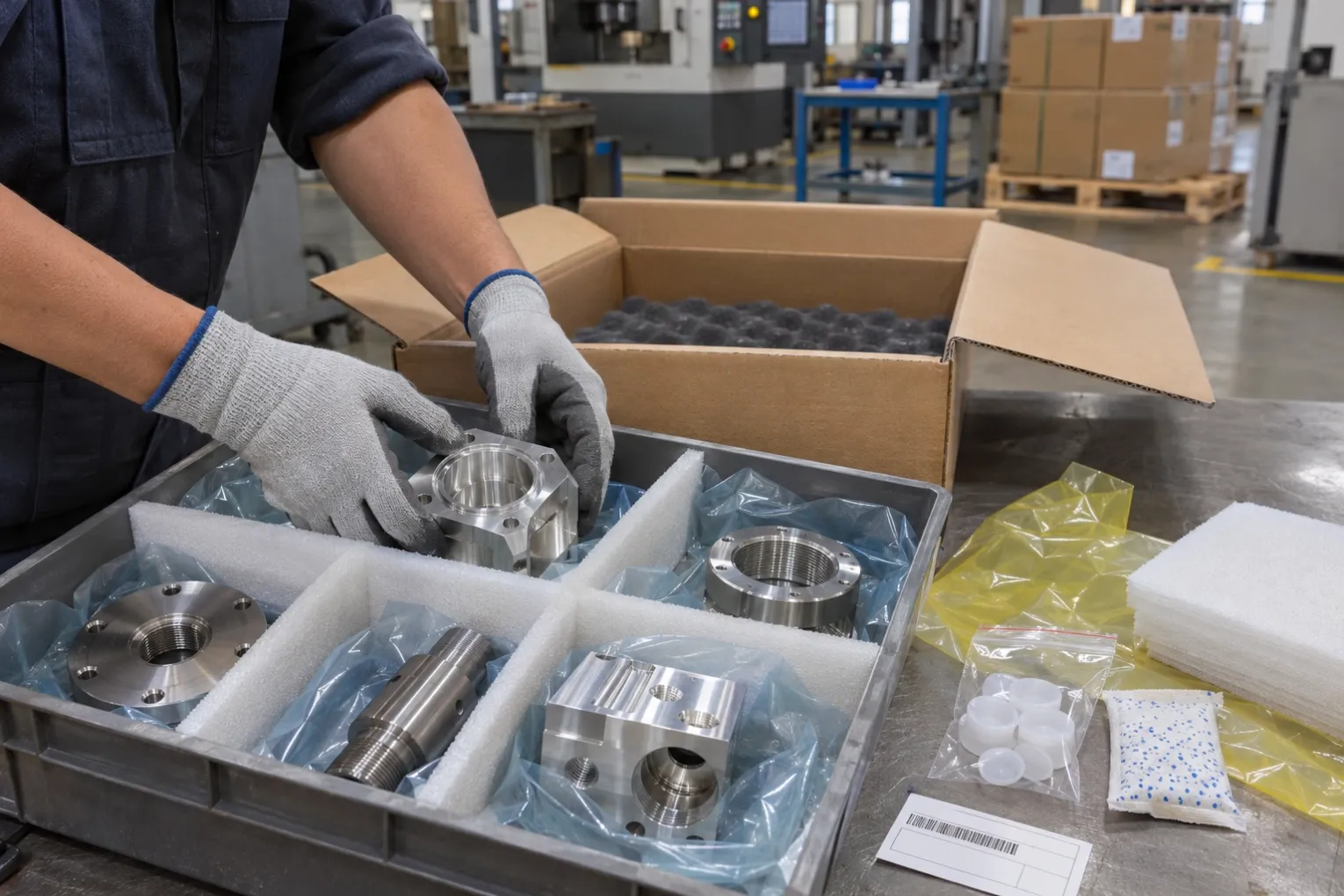
The parts passed final inspection. The dimensions are correct, the finish looks clean, and the inspection report is complete. Then the shipment arrives with dented edges, rubbed anodizing, rust spots, mixed revisions, or loose parts scattered inside the carton.
At that point, the machining process is no longer the only issue. Packaging has become part of product quality.
For manufacturers buying custom CNC machined parts, the right packaging specification can prevent incoming-inspection disputes, production delays and avoidable replacement orders. This guide explains what buyers should define before shipment, what a capable supplier should control, and how packaging should change with material, finish, geometry, quantity and transport route.
The Short Answer
Do not write “standard export packaging” and assume every risk is covered. Identify the features that cannot be allowed to touch, the surfaces that need corrosion protection, the quantity and revision controls required at receiving, and the transport conditions the shipment must survive.
For critical parts, approve a packaging method with the first article or pilot batch. Require clear part identification, lot traceability, internal separation, moisture protection where needed, and carton or crate strength appropriate to the actual mass. Photograph the packed shipment before dispatch and inspect the first delivery against the agreed method.
Why Good Parts Arrive Damaged
Machined parts are often most vulnerable after production is complete. A sharp edge can strike another component during road vibration. A polished face can rub against a plastic bag. Bare steel can corrode inside a sealed carton if moisture was trapped during packing. A heavy assembly can break through weak internal dividers even when the outer box looks acceptable.
Common causes include:
- Metal-to-metal contact between parts
- Excess movement inside bags, trays or cartons
- Insufficient protection on threads, sealing faces and precision edges
- Parts packed while still warm, wet or contaminated
- Incompatible packaging materials touching cosmetic surfaces
- Poor weight distribution or under-rated cartons
- Mixed part numbers, lots or drawing revisions
- Labels that detach, smear or cannot be matched to the paperwork
- Packaging designed for a short local delivery but used for international transport
The buyer and supplier should treat packaging risks with the same discipline used for machining risks: identify the failure mode, define the control and verify the result.
Start with the Part, Not the Box
The outer carton is only the final layer. Begin by reviewing the part features that can be damaged or confused.
Ask:
- Which dimensions are functionally critical?
- Are there sharp edges, thin walls, fins, pins or delicate threads?
- Which faces are cosmetic, sealing, bearing, optical or electrical surfaces?
- Can the part support its own weight without distortion?
- Will oil, VCI film, foam or adhesive residue affect later cleaning or assembly?
- Does the customer need individual identification or lot-level traceability?
- Is the part shipped unfinished, coated, assembled or cleaned for a controlled environment?
A small anodized cover, a 30-kilogram steel fixture and a cleaned vacuum component should not share the same packaging method simply because all three were CNC machined.
Prevent Metal-to-Metal Contact
The most important rule for finished machined parts is usually simple: critical surfaces should not touch another part during transport.
Individual bags can prevent direct contact, but a thin bag alone may not stop parts from striking each other. Use cells, dividers, molded trays, foam pockets, sleeves or rigid separators to control movement. Heavy parts need stronger separation than lightweight components.
For cosmetic finishes, confirm that the packaging material will not polish, stain or imprint the surface. Soft films can still trap chips or abrasive dust. A clean protective layer is more important than a thick layer contaminated during packing.
Where parts are stacked, the load path should pass through robust areas rather than thin walls, raised bosses or precision features.
Protect Threads, Edges and Precision Features
External threads, long pins, sharp corners and machined sealing lands are common damage points. Thread protectors, caps, plugs, sleeves or custom supports can prevent impact and contamination.
Avoid placing adhesive tape directly on a finished or functional surface unless the adhesive has been specifically approved. Residue can create cleaning problems, interfere with coatings or contaminate an assembly.
For parts with very sharp edges, packaging must also protect the people handling the shipment. A corner that cuts through a bag can then damage neighboring parts and create a safety risk at receiving.
Corrosion Protection for Steel and Sensitive Alloys
Bare carbon steel, tool steel, cast iron and some finished surfaces may require temporary corrosion protection. The correct method depends on material, cleanliness requirements, storage time, climate and the next manufacturing step.
Options may include:
- Approved rust-preventive oil
- VCI paper or film
- Desiccant inside a sealed moisture-barrier bag
- Protective caps and wraps on exposed functional surfaces
- Dry, clean packaging after controlled cleaning
More protection is not always better. Oil may be unacceptable for clean assemblies, vacuum parts, medical equipment or components that will be bonded. VCI materials should be compatible with the alloy and the customer’s process. Desiccant is useful only when the barrier package is properly sealed and the amount is appropriate.
The drawing, purchase order or packaging specification should state whether protective oil is permitted and who is responsible for removal.
Anodized, Plated and Cosmetic Parts
Anodized aluminum, plated components and appearance-critical parts need protection against rubbing, impact and staining. Cosmetic defects can be unacceptable even when the dimensions remain within specification.
Define the controlled surface and the acceptance standard. “No scratches” is difficult to apply consistently unless the viewing distance, lighting, defect size and surface class are understood.
For premium appearance surfaces, consider individual sleeves, non-abrasive film, dedicated tray cavities and a limit on the number of parts per layer. The supplier should pack parts only after final visual inspection so defects are not hidden inside the shipment.
Cleaned and Vacuum-Service Components
Parts cleaned for vacuum, semiconductor, optical or fluid-service applications require more than impact protection. Packaging must preserve cleanliness.
The process may require clean gloves, a controlled packing area, double-bagging, approved low-shedding materials and clear labels showing the cleaning status. Foam, cardboard dust, marker ink and conventional corrosion oils may be unacceptable.
If a part has ports or internal passages, specify whether they need clean caps or plugs. Packaging should not introduce particles that later become difficult to remove from blind holes or cross-drilled channels.
Quantity, Revision and Traceability Controls
Damage is not the only receiving problem. Mixed quantities and mixed revisions can stop production even when every individual part is good.
Each inner package should identify, as applicable:
- Customer part number
- Supplier part number
- Drawing revision
- Quantity
- Purchase order and line number
- Lot or batch number
- Material heat or certificate link when required
- Inspection or first-article status
- Date code or manufacturing date
Avoid placing multiple revisions in one unsegregated container. If partial quantities or different lots share an outer carton, separate and label them clearly. The packing list should match the physical hierarchy: pallet, carton, inner package and quantity.
Barcodes or QR codes can reduce manual receiving errors, but the human-readable information should still be present.
Cartons, Crates and Pallets
Packaging strength must match the actual weight and transport method. A carton that works for ten small aluminum parts may fail when the same design is filled with dense stainless-steel components.
Review:
- Gross weight per carton
- Stacking load during storage and transit
- Internal load distribution
- Pallet overhang
- Forklift access and restraint
- Crate structure for heavy or high-value parts
- Export wood-treatment requirements where applicable
- Protection from rain and warehouse humidity
Heavy parts should not rely only on loose foam or thin cardboard dividers. They may require bolted blocking, timber supports, steel banding or a custom crate. The part should not be able to build momentum inside the package.
Validate Packaging Before Production Shipments
Do not wait for a damaged production order to discover that the packaging method was inadequate.
Useful validation steps include:
- Pack a representative quantity using the proposed method.
- Check whether parts can move when the package is handled normally.
- Inspect the parts after a trial shipment or controlled handling test.
- Verify that the lowest layer supports the full stack without marking or distortion.
- Confirm labels remain readable and attached.
- Review corrosion protection after the expected transport and storage period.
- Check that receiving can identify and count parts without unnecessary unpacking.
- Photograph the internal layers and the closed outer package.
For high-value or fragile parts, a documented packaging work instruction is worth maintaining as a controlled production document.
What to Put in the RFQ or Purchase Order
If packaging matters to your operation, define it before the quotation is finalized. Otherwise, the supplier may quote a basic method that does not include the labor and materials needed for individual protection or custom trays.
Include:
- Part number, drawing revision and expected quantities
- Material and finish
- Critical and cosmetic surfaces
- Cleanliness or oil restrictions
- Corrosion-protection requirement and storage duration
- Individual or bulk-pack preference
- Maximum quantity or weight per inner box and outer carton
- Required labels, barcodes and traceability fields
- Transport mode and destination climate
- Pallet, crate or export requirements
- Photo documentation requirement
- Returnable-packaging expectations for repeat orders
If you already have a successful packaging standard, send drawings or photographs with the RFQ.
Questions to Ask a CNC Machining Supplier
Before approving the order, ask:
- How will critical surfaces and parts be prevented from touching?
- What protects threads, sharp edges and delicate features?
- What corrosion method will be used, and is it compatible with our next process?
- How are quantities, lots and drawing revisions separated and labeled?
- What is the maximum carton weight?
- How will heavy parts be restrained inside the crate or pallet?
- Can the supplier provide packaging photographs before dispatch?
- Is the packaging method controlled so repeat orders are packed consistently?
A useful answer should describe the proposed layers and materials for your part. “Export standard” is not a complete packaging plan.
FAQ
Should every CNC machined part be individually wrapped?
No. The method depends on geometry, finish, weight and risk. Parts can sometimes share a tray or divided cell, but critical surfaces should not contact or strike each other.
Is VCI packaging enough to prevent rust?
VCI can be effective when the material, enclosure and storage conditions are suitable. It is not a substitute for clean, dry parts and a properly sealed package.
Who should define the packaging method?
The buyer should define functional restrictions and receiving requirements. The supplier can then propose a practical method and price it. Critical packaging should be reviewed and approved before production shipments.
Should packaging photographs be required?
They are useful for first shipments, high-value orders and corrective actions. Photographs can show the number of layers, separation method, labels, moisture protection and final crate condition.
Can returnable trays reduce cost?
For repeat routes and stable volumes, returnable trays or containers may reduce waste and improve consistency. The business case should include cleaning, reverse logistics, loss and storage.
Final Takeaway
Machining quality is not complete until the correct part reaches the correct production line in usable condition. Packaging should protect dimensions, appearance, cleanliness, traceability and handling safety from final inspection through receiving.
Before requesting a quote, identify the surfaces that cannot touch, corrosion and cleanliness restrictions, shipment weight, labeling needs, transport route and expected storage time. A supplier that discusses these details early is more likely to protect both your parts and your production schedule.