CNC Machining Guides
Brass vs Copper CNC Machining Guide
Brass or copper? Compare conductivity, machinability, corrosion, strength and cost—and learn which alloy to specify for connectors, busbars, fittings and wear parts.
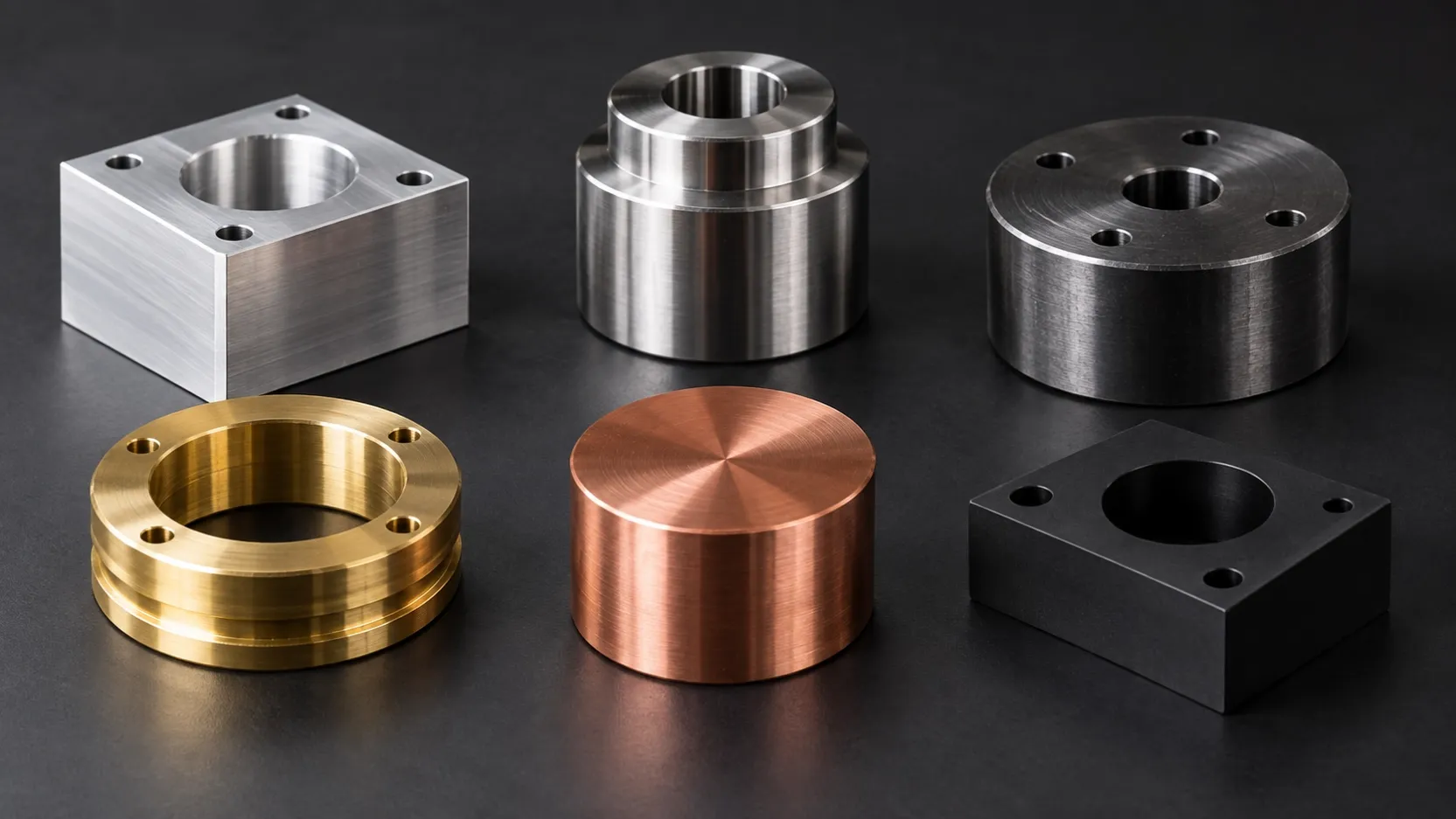
A connector housing was changed from brass to copper to improve conductivity. The unit cost nearly doubled, and the current path was still limited by the plated contact area. The material change solved a problem the design did not have, and created a cost problem the buyer had to explain.
Brass and copper are both copper-based materials, but they are not interchangeable. One is chosen for machinability, strength, and corrosion resistance. The other is chosen for electrical and thermal conductivity. The right choice depends on what the part must do, not on which material is more familiar.
This guide is written for design engineers and buyers who need to choose between brass, copper, and related alloys for CNC machined parts. It covers the material families, conductivity, machinability, corrosion, strength, cost, design rules, and what to put in the RFQ.
The Short Answer
Choose brass when you need good machinability, moderate strength, corrosion resistance, and a clean machined finish, and when the conductivity requirement is modest. Choose copper when electrical or thermal conductivity is the primary function, and accept the higher material cost and the more demanding machining. Choose bronze or a specific alloy when wear, corrosion, or strength is the main requirement. Always specify the alloy and temper, not just "brass" or "copper."
What Brass and Copper Actually Are
Brass is an alloy of copper and zinc. The zinc content and the additional elements determine the strength, the machinability, the color, and the corrosion behavior. Free-machining brass, such as C36000, is widely used for connectors, fittings, valves, and decorative parts because it machines quickly and produces a clean surface. Cartridge brass, such as C26000, is used for formed and machined parts that need higher ductility.
Copper for machining is usually a high-purity grade such as C11000 electrolytic tough pitch copper or C10100 oxygen-free copper. These grades are selected for electrical and thermal conductivity. They are softer and more ductile than brass, and they are more difficult to machine because the material tends to smear and build up on the cutting edge.
Bronze is a copper alloy with tin, aluminum, silicon, or other elements. It is used for bearings, bushings, wear plates, and marine components. Beryllium copper is a high-strength copper alloy used for springs, connectors, and molds; it requires special handling because beryllium-bearing dust is a health hazard.
The name on the drawing is not enough. The alloy, the temper, and the specification determine the properties.
Electrical and Thermal Conductivity
Conductivity is the main reason to choose copper. High-purity copper has very high electrical and thermal conductivity. The exact value depends on the grade, the temper, and the temperature. Oxygen-free copper is often specified for high-conductivity applications because the oxygen content is controlled.
Brass has lower conductivity than copper because the zinc and other alloying elements disrupt the conductive path. The difference can be significant. If the part is a current-carrying conductor, a busbar, a contact, or a heat sink, brass may not meet the requirement even if it machines beautifully.
Conductivity is not only a material property. The cross-section, the surface condition, the plating, the contact interface, and the temperature all affect the performance of the part. A copper part with a poor contact area may perform worse than a brass part with a well-designed contact. The material choice should be based on the whole current path, not just the alloy name.
Machinability
Brass is one of the easiest metals to machine. Free-machining brass is designed to break chips, reduce cutting force, and produce a good surface finish. It can be turned, milled, drilled, and tapped at high speed with good tool life. That is why brass is common in high-volume connector and fitting work.
Copper is more difficult. It is soft and ductile, so the chip can smear instead of breaking cleanly. It can build up on the cutting edge, which affects the surface finish and the dimensional accuracy. Copper also conducts heat away from the cutting zone, which can make the chip control and the tool life more challenging.
Machining copper well requires sharp tools with a positive rake, appropriate clearances, good coolant, and a process designed for the material. A shop that machines copper like brass will produce a poor surface, inconsistent dimensions, and unnecessary scrap.
Beryllium copper adds another dimension. The material is strong and conductive, but the beryllium content requires dust control, coolant management, and operator protection. The supplier should have a documented process for machining it.
Corrosion and Environment
Brass and copper both resist corrosion in many environments, but they behave differently.
Brass can dezincify in certain waters and chloride environments, especially under stagnant conditions. The zinc is selectively removed, leaving a porous copper-rich surface that is weaker and less corrosion resistant. Dezincification-resistant brasses and bronzes are available for potable water and marine applications. If the part will be exposed to water, salt, or chemicals, the alloy and the environment should be reviewed.
Copper forms a protective oxide layer and is generally corrosion resistant in many atmospheres. It can tarnish, and it can be attacked by ammonia, sulfur compounds, and some acids. The surface finish and the environment affect the appearance and the corrosion behavior.
Plating is often used to improve the contact resistance, the solderability, the wear resistance, or the appearance. Nickel, tin, silver, and gold are common connector finishes. The plating specification and the base material should be considered together.
Strength, Wear and Temperature
Brass is generally stronger and harder than pure copper. It is a good choice for structural fittings, valve bodies, and parts that need a combination of strength and machinability. The exact strength depends on the alloy and the temper.
Copper is softer and more ductile. It is excellent for conductivity and formability, but it is not the best choice for a wear surface or a high-load structural part. Bronze is often better for bearings and wear applications because it has better bearing properties and can operate with less lubrication.
Temperature affects both materials. The strength and the conductivity change with temperature, and the thermal expansion can affect the fit. If the part operates at elevated temperature, the design should be checked at the service temperature, not only at room temperature.
Cost Drivers
The material price is only one part of the cost.
Copper is generally more expensive than brass per kilogram. It is also more difficult to machine, which increases the cycle time and the tool wear. The scrap value is higher, which can offset some of the material cost, but the scrap credit depends on the supplier and the market.
Brass is usually cheaper to machine. The cycle time is shorter, the tool life is longer, and the surface finish is easier to achieve. For a part that does not need high conductivity, brass can be the lower total cost choice.
Plating, inspection, and tolerance also affect the cost. A tight tolerance on a copper part may require more careful fixturing and inspection than the same tolerance on a brass part. A plating specification adds process cost and lead time.
The right comparison is the total cost of the finished, inspected, plated part, not the price per kilogram of the raw material.
Design and Selection Rules
For current-carrying parts, start with the conductivity requirement. If copper is required, design for the machining behavior of copper: avoid thin, flexible features that are difficult to support, specify realistic tolerances, and allow for the softer material in the fixture and the inspection.
For connectors and fittings, brass is often the practical choice. It machines well, holds threads, and provides good corrosion resistance with the right alloy and plating. If the part will be exposed to potable water or chlorides, review the dezincification risk and consider a resistant alloy or bronze.
For wear parts, bronze is often better than brass or copper. It has better bearing characteristics and can handle sliding contact with less lubrication.
For high-strength conductive parts, beryllium copper may be the answer, but the machining and safety requirements must be managed. Do not specify it casually.
For decorative parts, brass offers a warm color and a good polished finish. Copper offers a distinct color and a living finish that changes with exposure. The appearance requirement should be specified, including the lacquer or the plating.
What to Put in the RFQ
State the alloy and the temper. "Brass" and "copper" are not enough. For brass, specify the grade and whether lead-free is required. For copper, specify the grade and the conductivity requirement. For bronze or beryllium copper, specify the alloy and the condition.
State the application. Is the part carrying current, transferring heat, sealing fluid, bearing a load, or providing a decorative surface? The application determines the material and the inspection.
State the conductivity or resistance requirement if the part is electrical. State the plating, the contact resistance, and the solderability requirement if the part is a connector. State the pressure, the fluid, and the temperature if the part is a fitting.
State the tolerance, the surface finish, and the inspection method. Copper and brass behave differently in machining, so the tolerance and the finish should be realistic for the material.
State the quantity, the delivery destination, and the documentation. If the part requires a material certificate, a conductivity test, or a plating certificate, include it in the RFQ.
FAQ
Is brass a good conductor?
Brass conducts electricity, but less than copper. It is suitable for many connectors and fittings, but it may not meet a high-conductivity requirement. The alloy and the cross-section determine the performance.
Why is copper harder to machine than brass?
Copper is softer and more ductile, so the chip can smear and build up on the tool. It also conducts heat away from the cutting zone. Sharp tools, good coolant, and a process designed for copper are required.
Can brass be used for potable water fittings?
Some brasses can dezincify in water. Dezincification-resistant brasses and bronzes are available. The alloy and the water chemistry should be reviewed before the material is selected.
Is beryllium copper safe to machine?
Beryllium copper can be machined safely with the right controls. The beryllium-bearing dust is a health hazard, so the supplier should have a documented process for dust control, coolant management, and operator protection.
Which is cheaper, brass or copper?
Copper is generally more expensive per kilogram and more difficult to machine. Brass is usually cheaper to machine. The total cost depends on the material, the cycle time, the scrap credit, the plating, and the inspection.
Choosing a Brass or Copper Machining Supplier
A supplier should ask what the part must do before recommending a material. A connector, a busbar, a valve fitting, and a bearing have different requirements, and the right alloy is not the same for all of them.
Zync Precision is an ISO 9001-certified manufacturer of custom CNC machined parts for medical, aerospace, consumer electronics, and automotive applications. We machine brass, copper, bronze, and other copper alloys from customer drawings, with material traceability, dimensional inspection, and production support. Our engineering team reviews drawings, materials, tolerances, surface finishes, and delivery requirements, and responds to quote requests within 24 hours. If you are sourcing brass or copper components, send your drawing, alloy, temper, conductivity or application requirement, plating, quantity, and destination.
Request a CNC machining quote and let us review your brass or copper project.