CNC Machining Guides
Aerospace CNC Machining: Materials, Tolerances, Traceability and Supplier Checklist
A buyer's guide to aerospace CNC machining: material grades, tight tolerances, special processes, traceability, AS9100 expectations and supplier qualification.
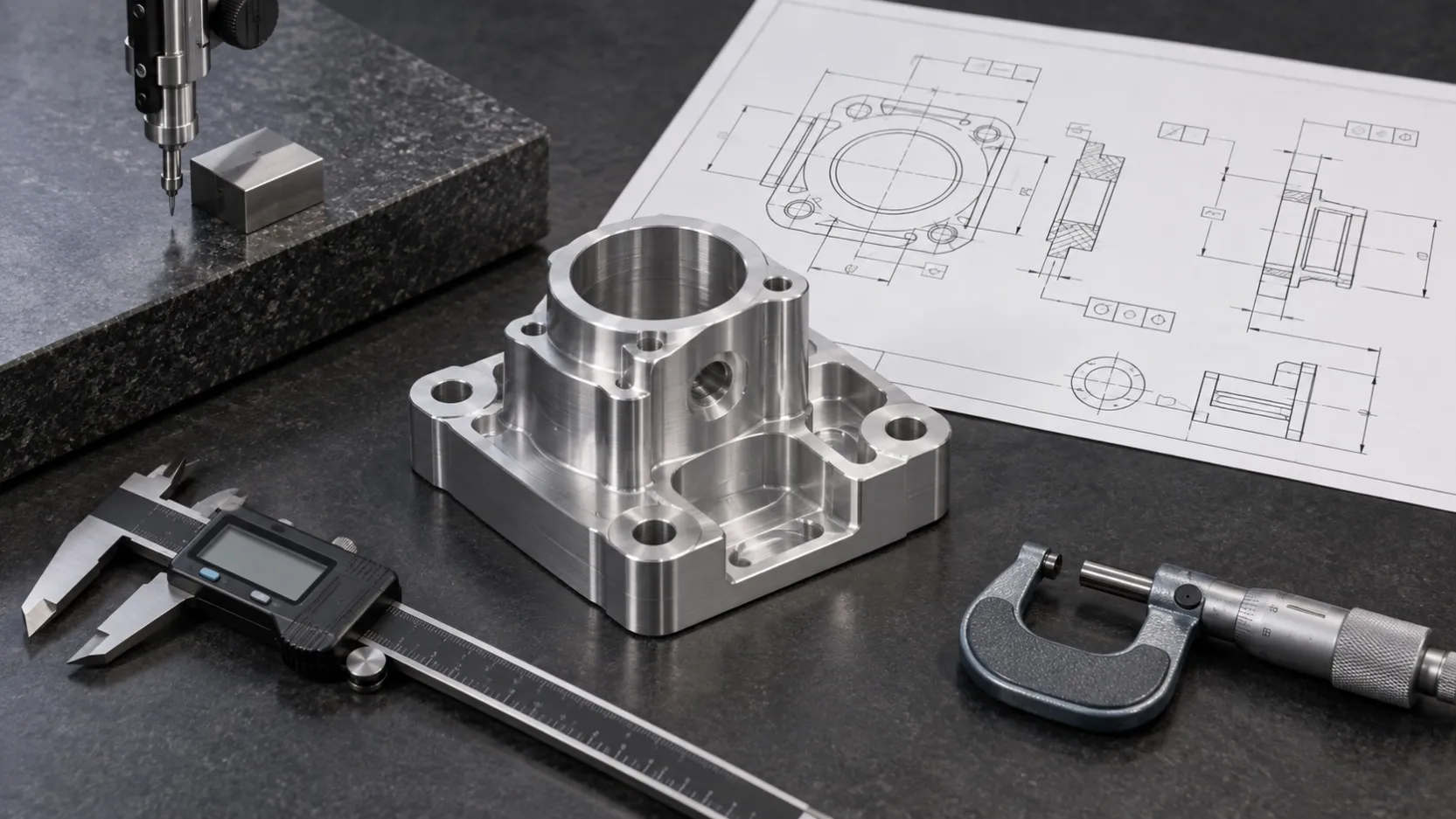
An aerospace part can meet every dimension on the drawing and still fail supplier qualification. The material certificate may be missing the heat lot. The first article may pass, but the process change that followed was never approved. The surface finish may be correct, but the special process was performed by an unapproved subcontractor.
Aerospace CNC machining is not only about precision. It is about control. The buyer needs to show that the part was made from the specified material, by an approved process, inspected with a defined method, and traceable from the raw material to the finished component.
This guide is written for buyers, engineers, and quality teams sourcing custom machined parts for aerospace and high-reliability applications. It covers material selection, tolerances, surface finish, documentation, quality system expectations, and the questions to ask before placing an order.
The Short Answer
Specify the material grade, condition, and specification, not just the alloy family. State the tolerances by feature and the datum scheme, and define the inspection method. Require the mill certificate, heat lot, certificate of conformity, first article inspection, and inspection report. Confirm the supplier's quality system scope before you assume AS9100. Control special processes and process changes, and treat the first article as the baseline for production.
What Makes Aerospace CNC Machining Different
Aerospace parts are often made in low to medium volumes, with tight tolerances and demanding documentation. The machining may be similar to other industries. The difference is the consequence of a material mix-up, an untreated stress concentration, an unapproved process change, or a missing certificate.
Aerospace buyers often work under a quality system that requires supplier approval, incoming inspection, first article inspection, and change control. The supplier must be able to work within that system. A shop that can hold a tolerance but cannot provide a material certificate or a controlled process is not an aerospace supplier, even if the parts look good.
Materials Used in Aerospace CNC Machining
The material must meet the strength, weight, fatigue, corrosion, and temperature requirements of the application. Common materials include aluminum, titanium, stainless steel, nickel alloys, and high-performance polymers.
Aluminum alloys
6061 and 7075 are common aerospace aluminum alloys. 7075 offers higher strength; 6061 offers better corrosion resistance and weldability. The temper and the material specification matter. A generic "aluminum" certificate is not enough for a controlled aerospace part.
Titanium alloys
Ti-6Al-4V (Grade 5) is used for high-strength, low-weight components. Ti-6Al-4V ELI (Grade 23) is used where improved ductility and fracture toughness are required. Titanium is corrosion resistant and biocompatible, but it work-hardens and requires careful tooling and coolant.
Stainless steels
17-4PH and 15-5PH are common precipitation-hardening stainless steels for aerospace components that need strength and corrosion resistance. The heat treatment condition is critical. The certificate should confirm the grade, the condition, and the heat lot.
Nickel alloys
Inconel 718 and other nickel alloys are used for high-temperature engine and exhaust components. They are difficult to machine and require controlled tooling, coolant, and inspection.
High-performance polymers
PEEK, PEI, and other engineering polymers are used for brackets, insulators, and lightweight components. The grade must meet the application requirement, and the material certificate should confirm the grade and any regulatory compliance.
Material Condition and Heat Treatment
The material specification is only part of the requirement. The condition of the material also matters.
For aluminum, the temper affects strength and machinability. A 7075-T6 part is not the same as a 7075-T651 part, and the drawing should state the temper and the material specification. For stainless steel, the condition may be annealed, solution treated, or aged. For titanium, the grade and the interstitial limits matter. For nickel alloys, the condition and any heat treatment requirement affect machining and final properties.
The mill certificate should identify the grade, the heat lot, the condition, and the specification. If the part requires heat treatment after machining, the process should be specified and controlled. Stress relief may be required for parts with tight tolerances or thin sections. The supplier and the buyer should agree on who performs the heat treatment, how it is verified, and what records are provided.
Do not accept a certificate that lists only the alloy family. A certificate that says "stainless steel" or "aluminum" without the grade, condition, and heat lot is not enough for a controlled aerospace part.
Common Aerospace Part Types
Aerospace machining covers a wide range of parts, and the requirements change with the part type.
Brackets and mounts often have tight hole patterns, thin flanges, and weight-saving pockets. Housings and enclosures may have thin walls, sealing surfaces, and complex internal features. Bushings and sleeves require control of bore size, roundness, and surface finish. Structural fittings and links carry load and require traceability and fatigue-conscious design. Fluid system components require clean internal passages, sealing surfaces, and compatibility with the fluid. Tooling and fixtures require stability and repeatability.
The part type should drive the inspection plan. A bracket may need a CMM check of hole positions and a visual check of edges. A fluid component may need a pressure test, a cleanliness check, and a bore inspection. A structural part may need a first article inspection and a material certificate package. Do not use one generic inspection plan for every aerospace part.
Tolerances and GD&T
Aerospace drawings often use tight tolerances, geometric dimensioning and tolerancing, and a defined datum scheme. The achievable tolerance depends on the feature, the material, the geometry, the setup, and the inspection method.
A general tolerance of plus or minus 0.05 mm is common for many features. Precision features can be held to plus or minus 0.01 mm, and selected features can be tighter when the drawing, process, and inspection plan support it. A blanket tolerance of plus or minus 0.005 mm on every feature is usually unnecessary and expensive.
The datum scheme should match the function of the part and the inspection setup. If the drawing calls for a position tolerance, the datum reference frame must be clear. If the part is thin or flexible, define the inspection condition, because the part may deflect under the probe or in the fixture.
CMM inspection should use a measurement uncertainty that is appropriate for the tolerance. For critical features, the inspection plan should identify the method, the sampling, and the acceptance criteria.
Surface Finish and Special Processes
Surface finish affects fatigue, corrosion, sealing, and appearance. Specify Ra by surface and by function, not as a single note for the whole part. A sealing surface, a bearing surface, and a cosmetic surface may have different requirements.
Aerospace parts often require special processes such as anodizing, passivation, shot peening, painting, or coating. These processes may need to be performed by an approved supplier with a controlled specification. If the drawing or the contract requires a special process, confirm that the supplier and its subcontractors are approved for that process.
Do not assume that a general machining supplier can perform or control every special process. Ask who performs the process, what specification is used, and how the result is verified.
The Documentation Package
The documentation should match the risk of the part. A typical aerospace package includes:
A mill certificate or material certificate of analysis, with the grade, heat lot, and specification. A certificate of conformity that states the parts were made to the drawing and the purchase order. A first article inspection report for the first production lot. An inspection report for the critical dimensions, with the sampling plan and the measurement method. A process record for special processes. A change control record for any change in material, process, supplier, or inspection method.
For some programs, the buyer may also require a quality agreement, a supplier audit, and a process validation package. The exact requirements depend on the contract and the buyer's quality system.
Quality System Expectations
ISO 9001 is a general quality management system. AS9100 is the aerospace quality management system. They are not interchangeable. A supplier may be ISO 9001 certified but not AS9100 certified. A supplier may be AS9100 certified for one site or one product family but not for the process you need.
Before you assume that a supplier can support an aerospace program, confirm the certificate and the scope. Ask for the certificate, check the scope, and verify the expiry date. If the program requires AS9100, the supplier's quality system should be audited or assessed against that standard. Do not rely on a logo on a website.
Supplier Checklist for Aerospace CNC Parts
Ask these questions before placing an aerospace order.
Can you provide the material certificate with the grade, heat lot, and specification? Can you provide a first article inspection report with ballooned drawing numbers and measured values? What is your inspection method and measurement uncertainty for the critical features? How do you control special processes and subcontractors? What is your traceability system from raw material to finished parts? How do you control process changes, and who approves them? What quality system certifications do you hold, and what is the scope? Have you made a part with a similar material, tolerance, and risk profile? Can you support a pilot lot and a production ramp?
The answers should be specific. A supplier that answers "yes" to everything without evidence is not an aerospace supplier.
From Prototype to Production
Aerospace projects often start with a prototype and move to a pilot lot and then to production. The handoff should be controlled.
Freeze the drawing and the specification before the pilot lot. Confirm the material grade and the supplier. Run the first article inspection and review the results with the design team. Define the process windows and the inspection plan. Control special processes and subcontractors. Train the operators and document the training. Agree on the change control process and the notification requirements.
A pilot lot is not just a larger prototype. It is the first chance to prove that the process is repeatable and that the documentation is complete. Treat it that way.
FAQ
Does an aerospace part need AS9100?
It depends on the program, the customer, and the contract. AS9100 is the aerospace quality management standard. If your program requires it, confirm the supplier's certificate and scope. Do not assume that ISO 9001 is equivalent.
Can aerospace parts be machined to plus or minus 0.01 mm?
Many features can, but it depends on the geometry, the material, the setup, and the inspection method. Specify tight tolerances only where they affect function, and define the inspection condition for thin or flexible parts.
Which aluminum alloy is best for aerospace?
7075 offers higher strength; 6061 offers better corrosion resistance and weldability. The right choice depends on the application, the temper, and the specification. The drawing should state the alloy, temper, and material specification.
How do you control special processes?
Use an approved supplier, a controlled specification, and a documented process record. Confirm the supplier's approvals and the scope of the process. Do not assume that a machining supplier can perform every special process.
Can you provide a certificate of conformity?
A certificate of conformity should state that the parts meet the drawing and the purchase order. It should be backed by the material certificate, the inspection report, and the process records. Ask for the complete package, not just the certificate.
Choosing an Aerospace CNC Machining Supplier
An aerospace supplier should be able to discuss the material, the tolerance, the inspection, the special processes, the documentation, and the change control in specific terms. The supplier should also be honest about the quality system scope and the processes it can support.
Zync Precision is an ISO 9001-certified manufacturer of custom CNC machined parts for medical, aerospace, consumer electronics, and automotive applications. Our engineering team reviews drawings, materials, tolerances, surface finishes, and delivery requirements, and responds to quote requests within 24 hours. If you are sourcing aerospace components, send your drawing, material, tolerance, surface finish, special process requirement, documentation requirement, and destination.
Request a CNC machining quote and let us review your aerospace project.